
Charlotte + Lucas's Rodeo Hills Wedding: A Guide to Planning an Oregon Winery Wedding at Rodeo Hills in Dundee
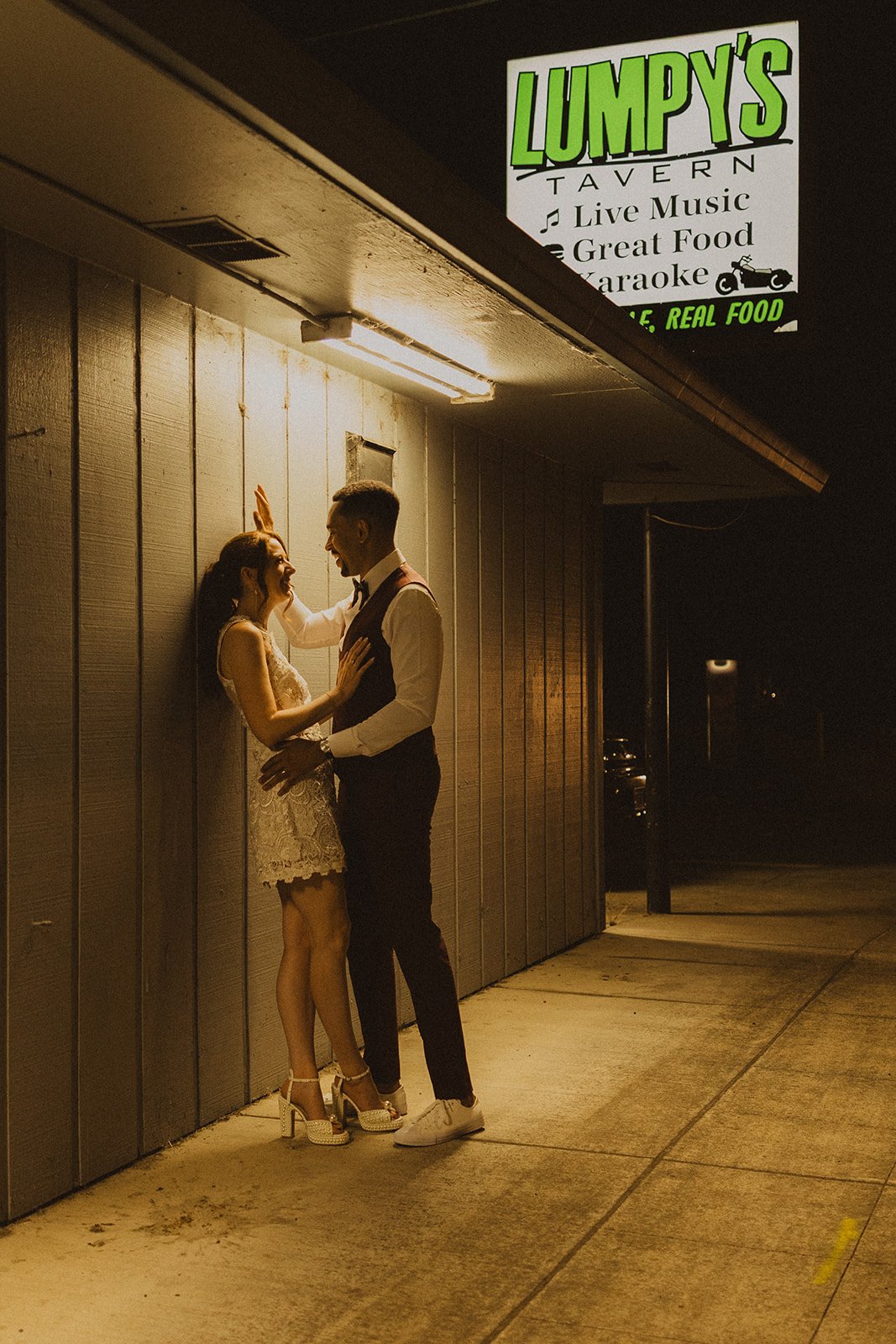
I photographed Charlotte and Lucas's engagement session in downtown Portland, on sidewalks, in traffic, with the city doing most of the work in the background. Then I photographed their wedding at a small winery in the Dundee Hills, which is about as far from a downtown crosswalk as you can get while staying under an hour from the same city.
I bring up the contrast because couples ask me some version of this constantly: do our locations need to match, and does it say something about us if the two places we love have nothing in common? They don't, and it doesn't. Pick the place that fits the day you're actually planning, and let the other one be a different day.
The question I get about wineries is never "which one." It's some version of "will this feel like us, or will it feel like a venue?" Nobody can answer that with a list of twenty properties and a photo of each. If you want a smaller wedding where dinner runs long, where guests settle in instead of getting moved from one thing to the next, and where the place itself gives everyone something to do for a whole weekend, Oregon wine country makes a strong case for itself. The trade-off is that a working winery asks more of you logistically than a full-service venue does. That's the part I'd want you to understand before booking one, and it's most of what I'm going to get into here, including who I'd talk out of it.
In this guide
What an Oregon Winery Wedding Feels Like
The thing that surprises people is the pace. A winery is already built around people sitting down and staying a while, so the day tends to slow itself down without anyone managing it. Guests find a spot and hold it. Nobody is looking for something to do during the gap between the ceremony and dinner, because there's wine and a view and somewhere comfortable to stand.
That matters more than it sounds like it should. The hardest hour to plan at most weddings is the one where the couple disappears for portraits, and at a winery that hour takes care of itself. I've watched cocktail hour run long at wine country weddings simply because nobody wanted to move, which is a good problem and one you should plan for rather than fight. None of that is specific to wineries, for what it's worth. It's the same case I keep making about building a timeline with room in it instead of a schedule you're behind on all day.
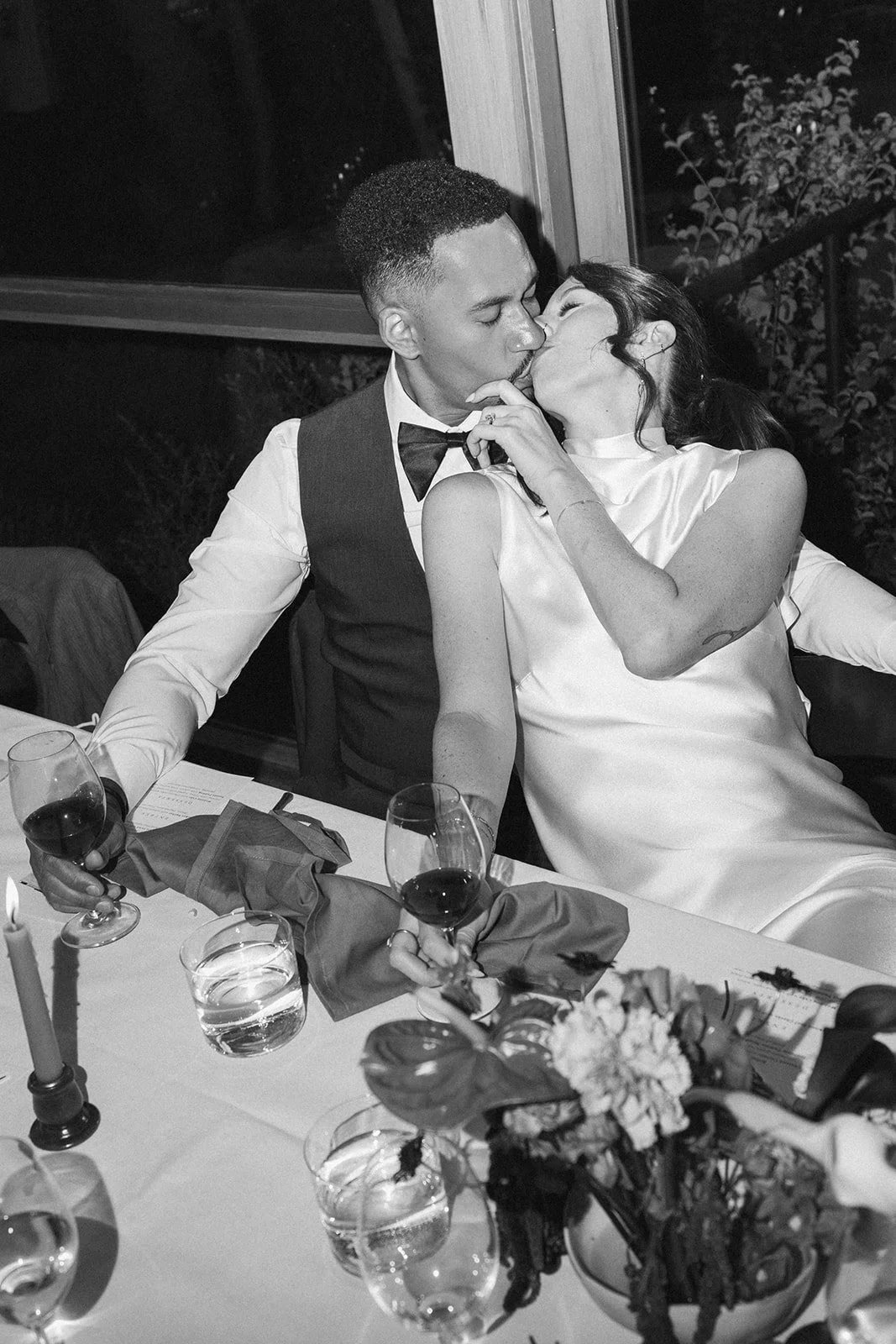
The other thing is scale, and it's worth being concrete about it. The tasting room at Rodeo Hills is 2,200 square feet. That's a house, not a hall. They do tastings by appointment only, no walk-ins, and their signature offering is something called The Long Lunch, a full meal served alongside the wine. That tells you what the place is built for, and it isn't throughput.
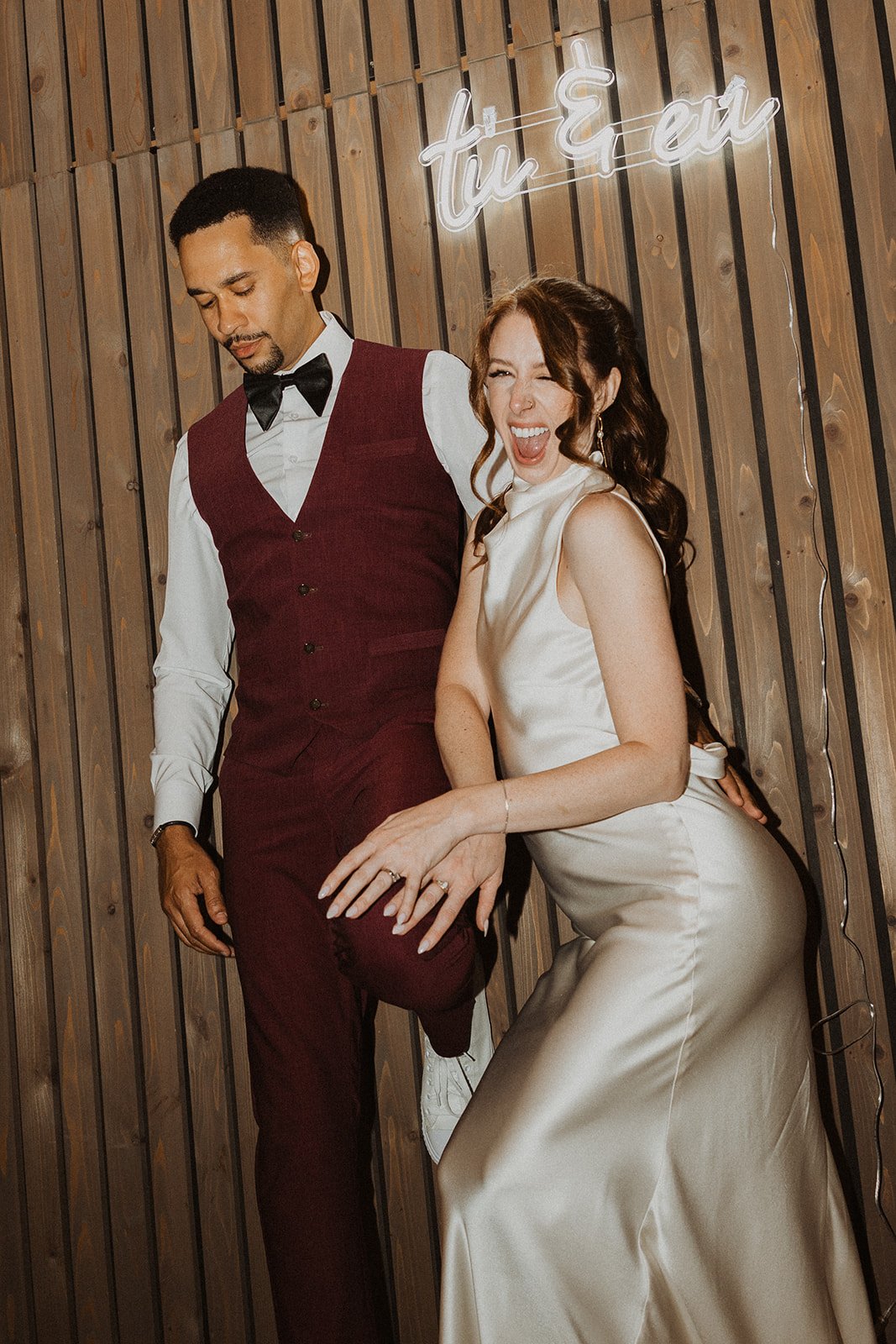
You feel that on a wedding day. If you've been to a wedding where the room flipped from ceremony to reception in forty minutes while two hundred people stood holding drinks in a corridor, this is the opposite of that. Dinner runs long because nothing is forcing it not to.
The trade-off is real, though. A venue that isn't running weddings every weekend also doesn't have the machinery of one. There's no events manager who has done this forty times this year, no tables and chairs sitting in a storage room, no crew that already knows where the extension cords live. That work doesn't disappear. It moves to you and whoever you hire, which is the part couples underestimate and the reason I get into the questions further down.
That's less a knock on the venue than a question about you. If your guest list is one you could sit down and eat dinner with, and you'd rather your people be comfortable than impressed, a winery hands you a version of the day a larger venue can't. If you're planning for three hundred guests and a dance floor that holds most of them, it will fight you the whole way, and you'll spend budget solving problems a full-service venue would have handled inside the contract. If you're weighing a winery for your own wedding, here's what a full day of coverage with me looks like, including the timeline help that makes a venue like this one work.
Rodeo Hills and What That Room Does
The first thing worth knowing is that Rodeo Hills is a working winery first, not a purpose-built wedding venue. That isn't a problem, it just means you're asking a business to do something outside its normal week, and the conversation goes better if you walk in knowing that.
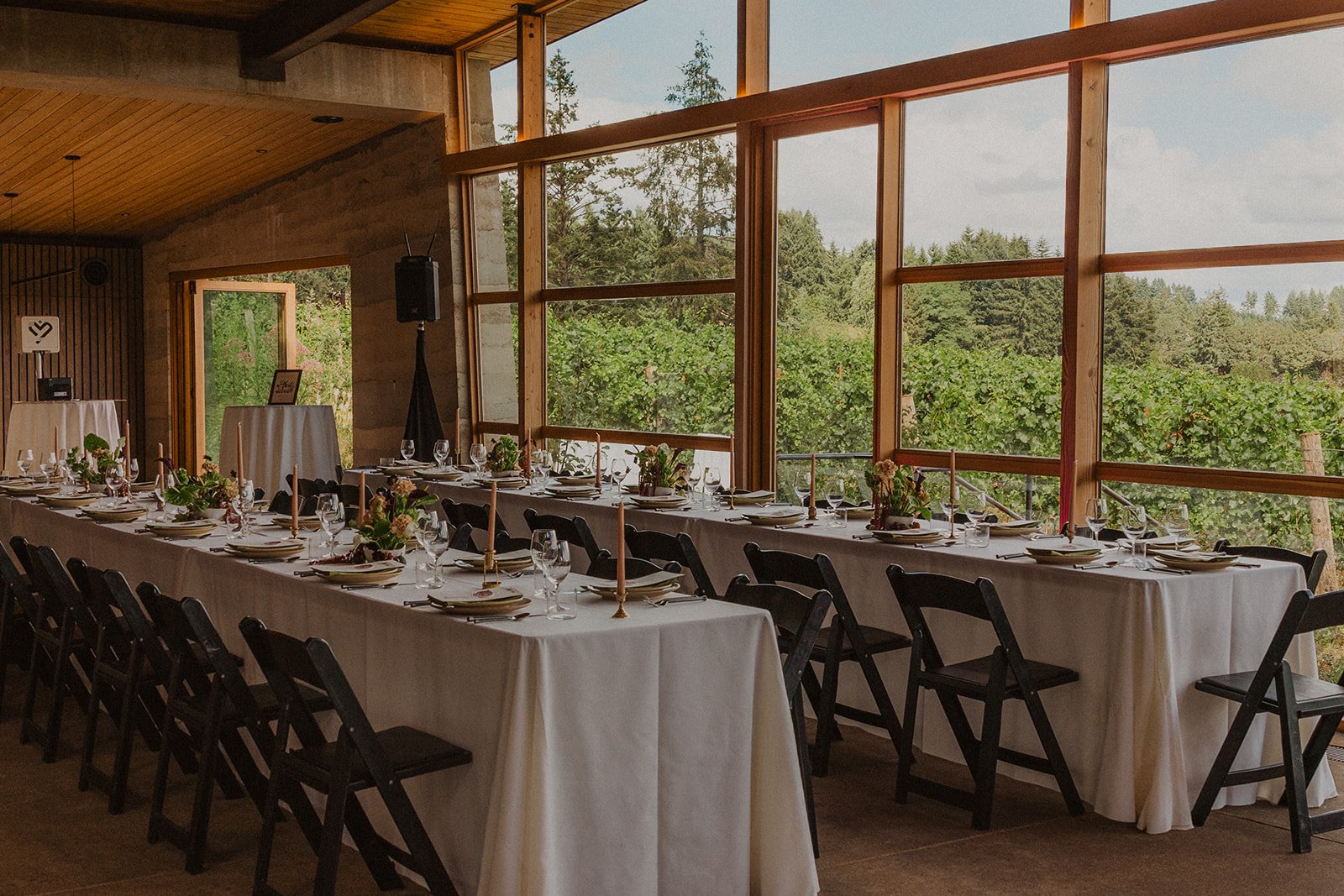
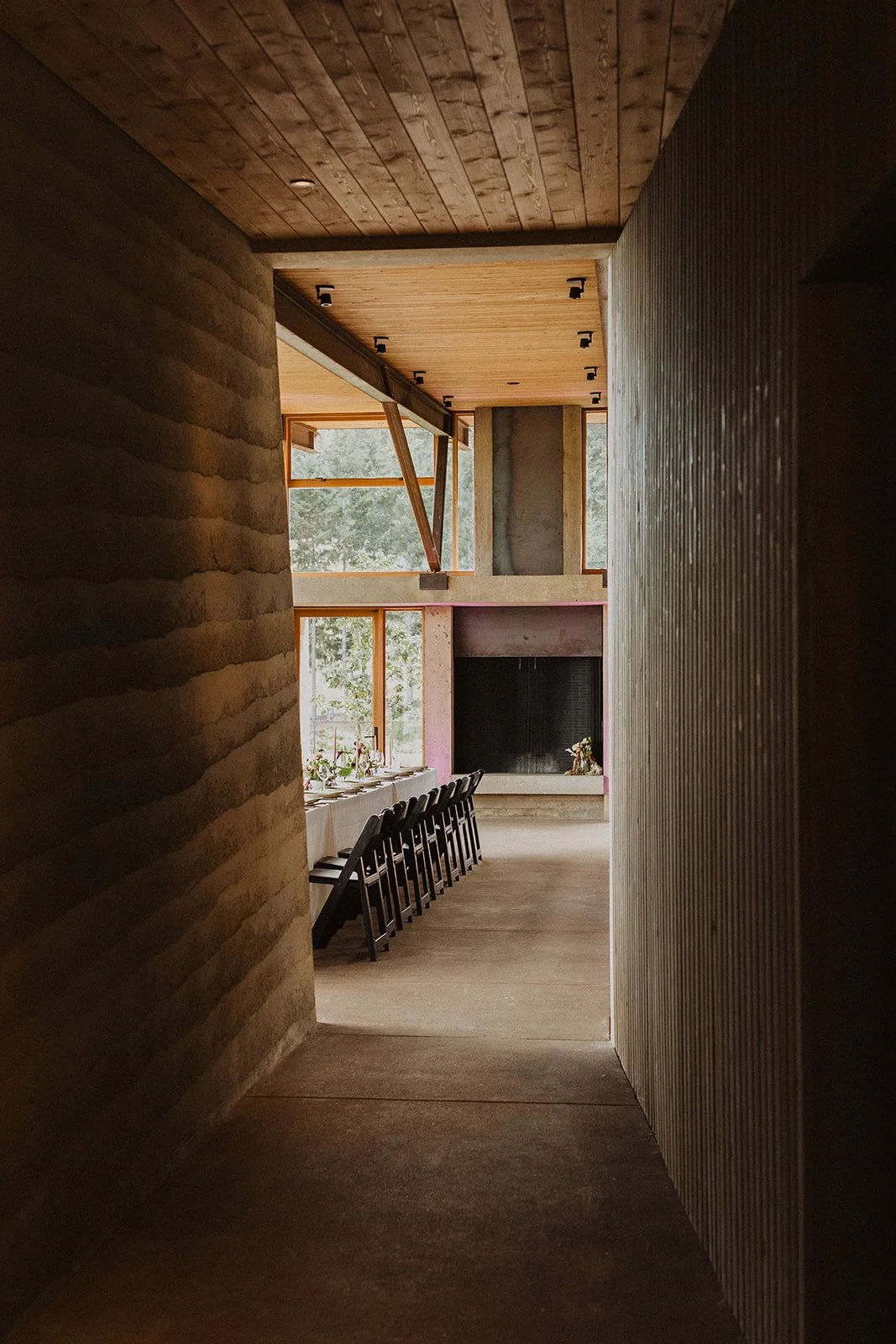
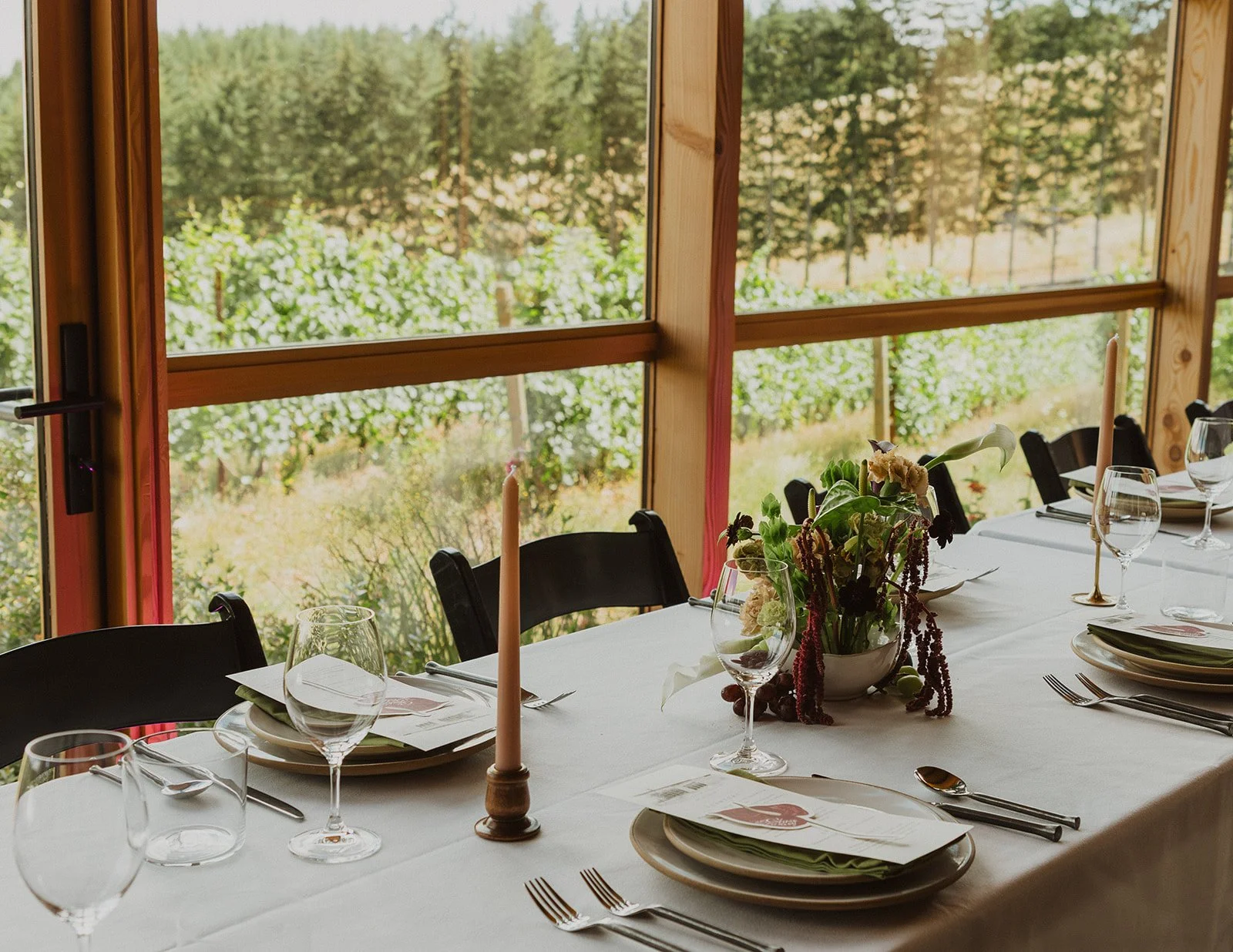
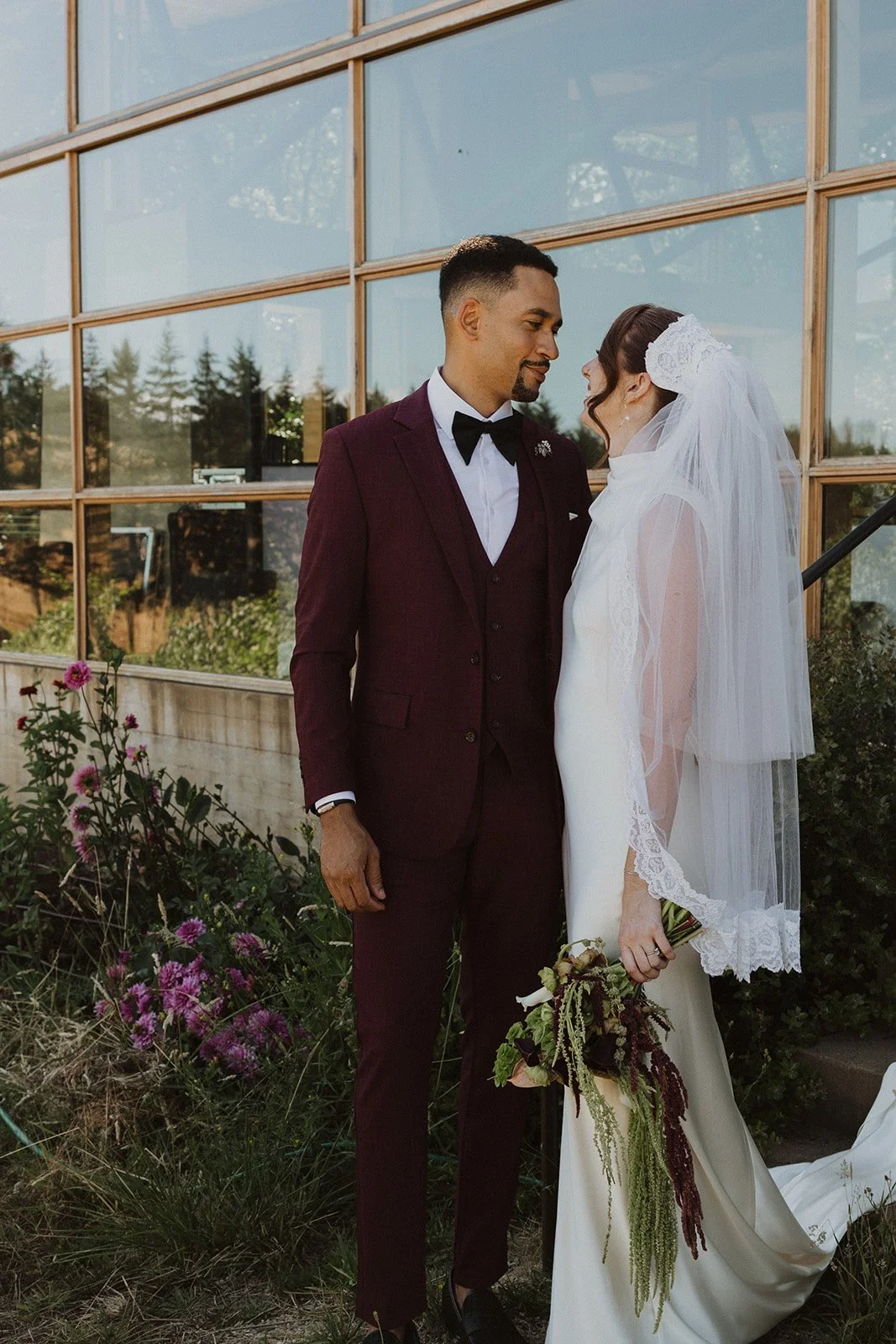
The building is the reason I'd tell you to go see it. You come in through a narrow hallway with two-foot-thick rammed-earth walls on either side and dark stained cedar overhead, compressed and low and a little dim. Then it opens into a room with an eighteen-foot ceiling and glass on three sides. That sequence is deliberate, and it does what compression always does, which is make the room feel much larger than it is the second you're standing in it.
Here's why that matters to you and not to an architecture magazine: Glass on three sides under a ceiling that high fills the room with daylight, which means moving inside doesn't cost you anything. That's rarer than it sounds because, at most venues, a rain call means trading the light you planned for whatever a windowless event room has, and everyone can tell in the photos afterward even if they can't say why. Here, inside isn't the fallback. It's the other room.
If a rainy forecast is the thing that would genuinely upset you, that's the reason I'd have you look at this place. An Oregon winery wedding in a room like that turns the forecast back into something you check out of habit instead of something that decides how your day goes.
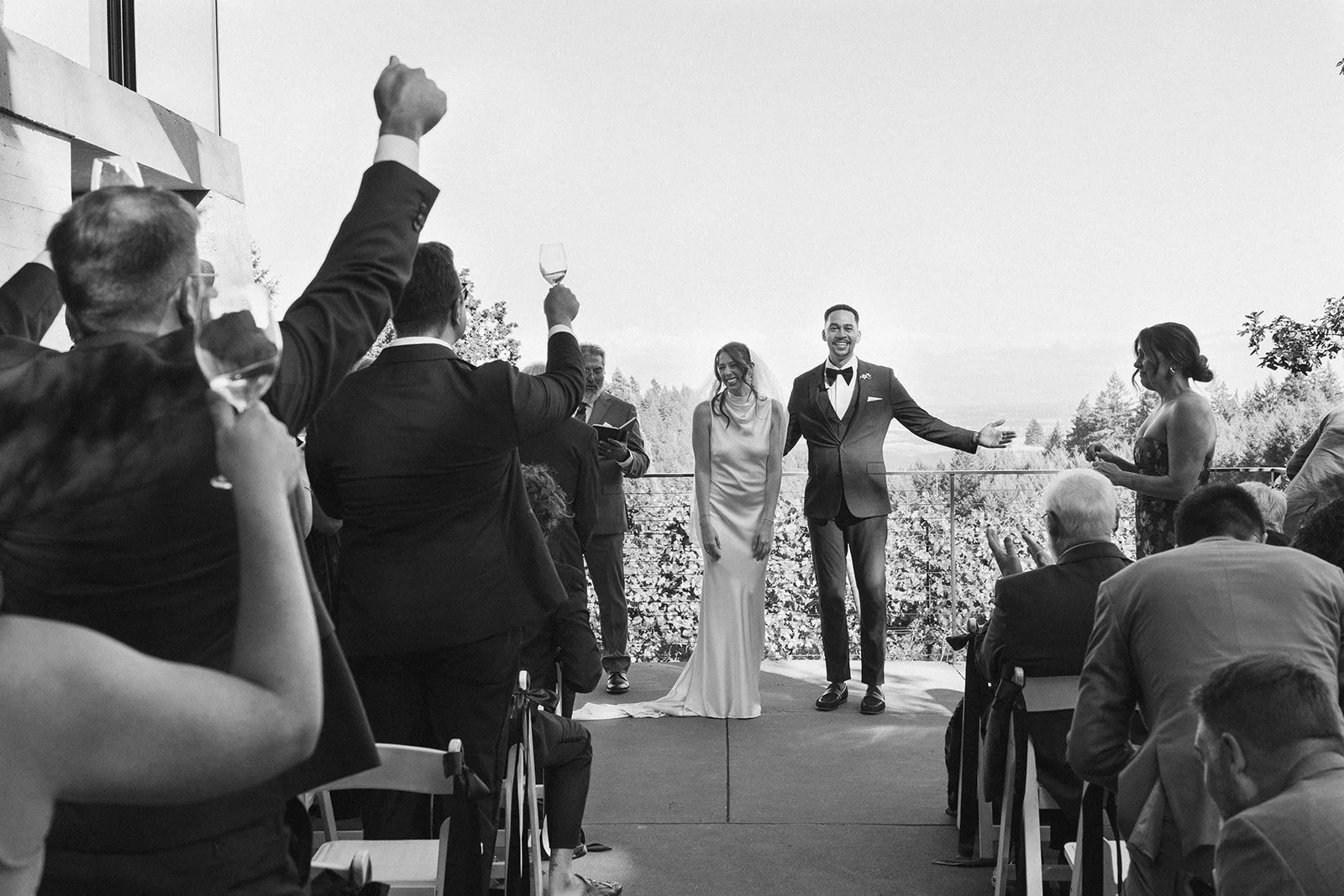
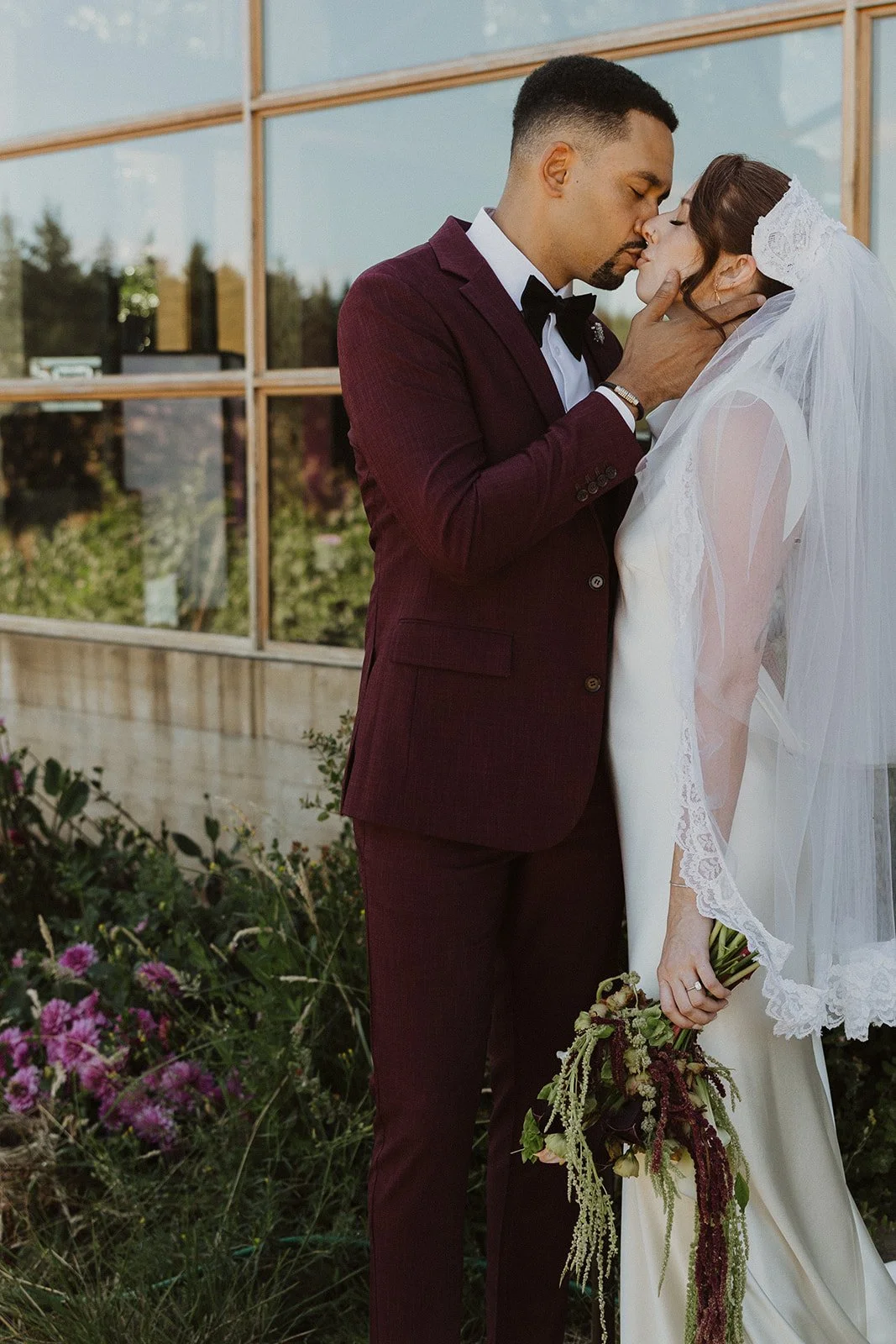
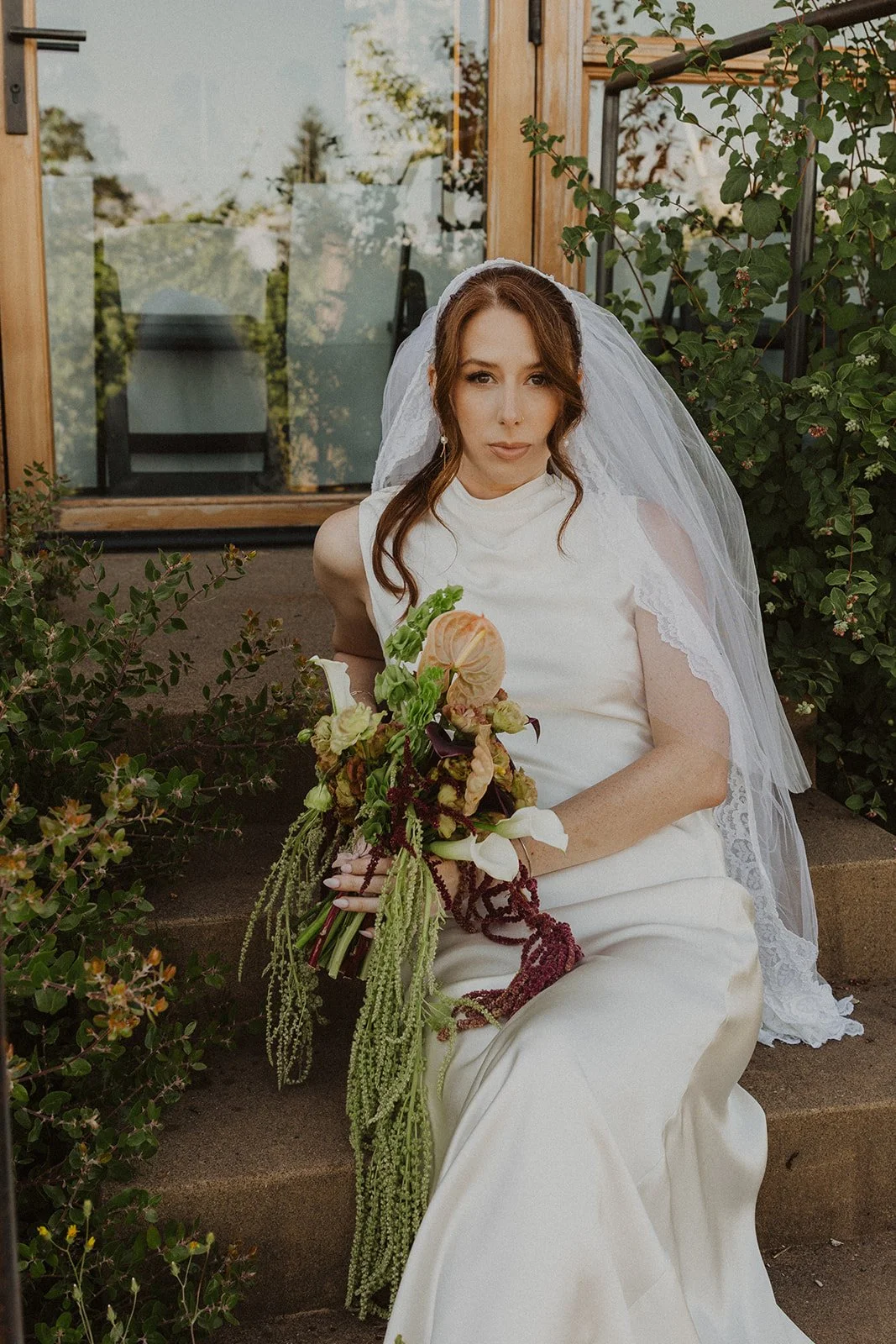
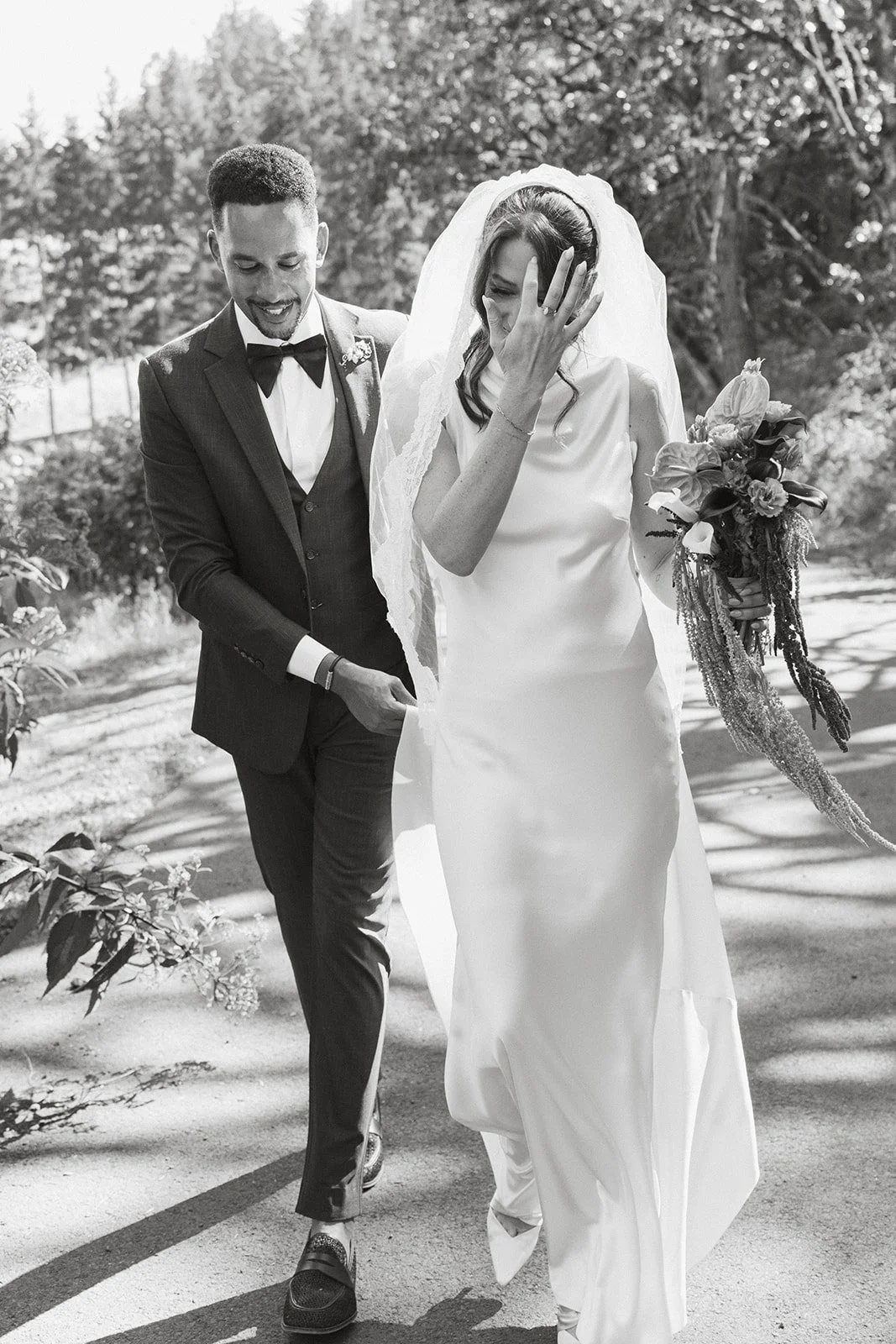
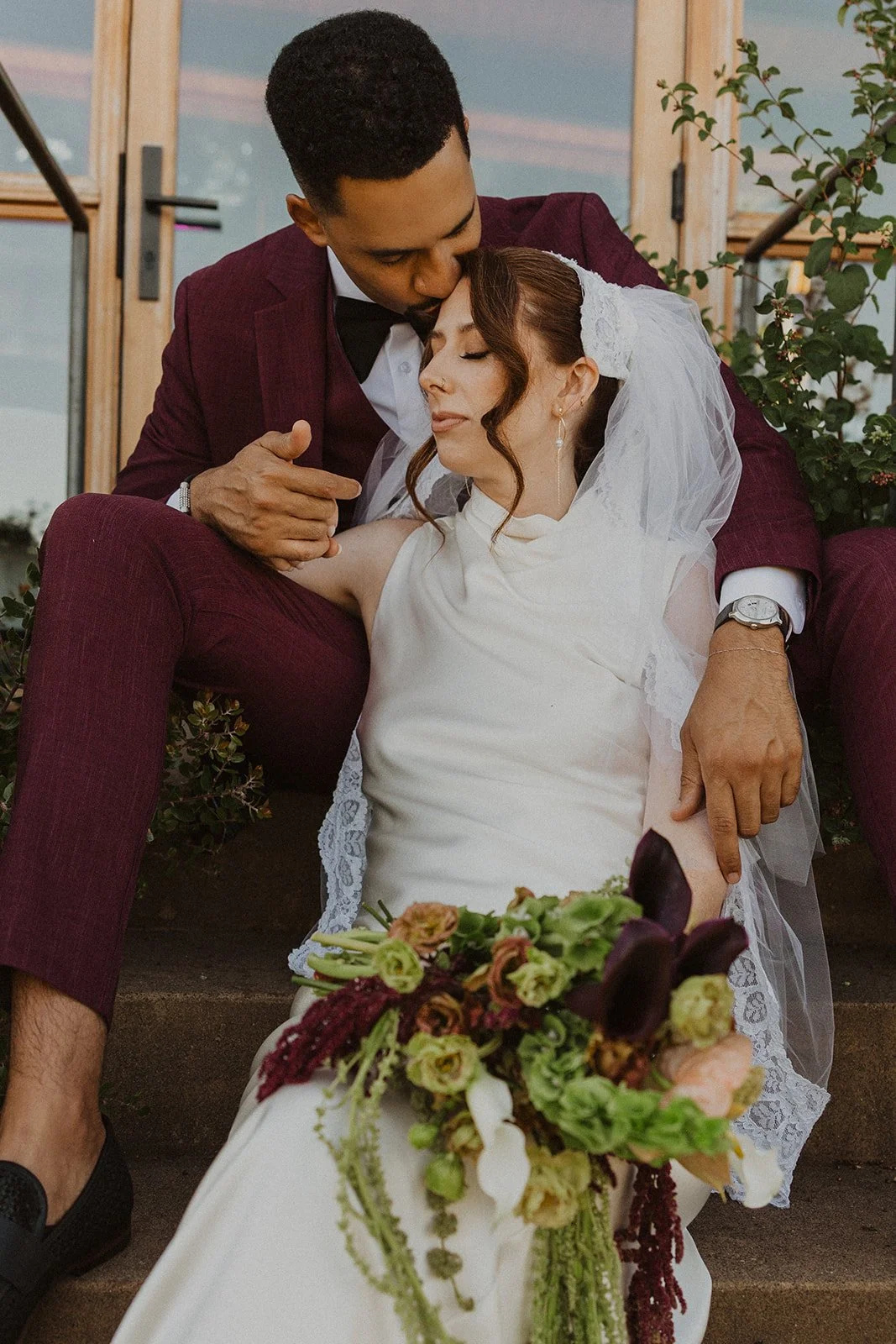
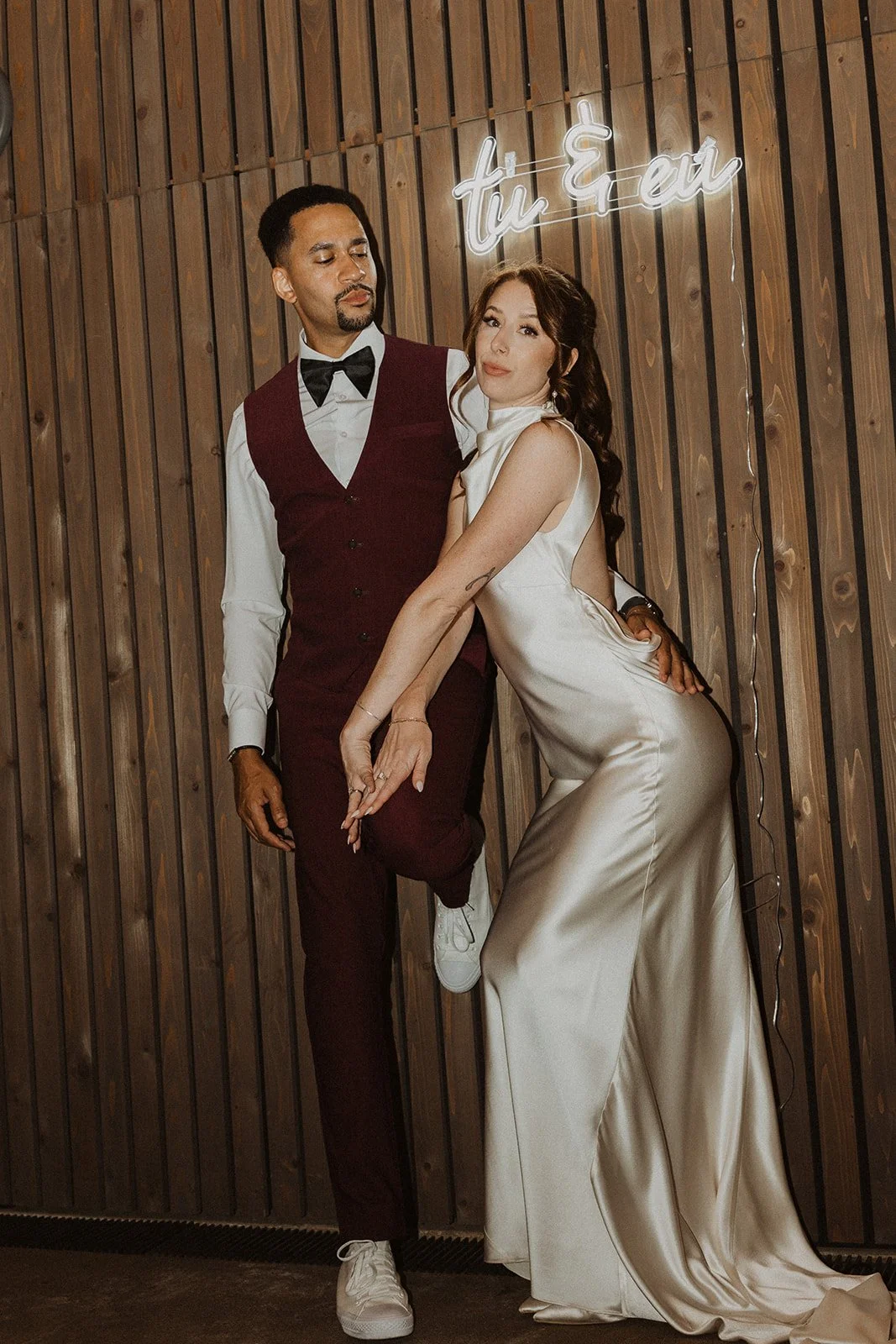
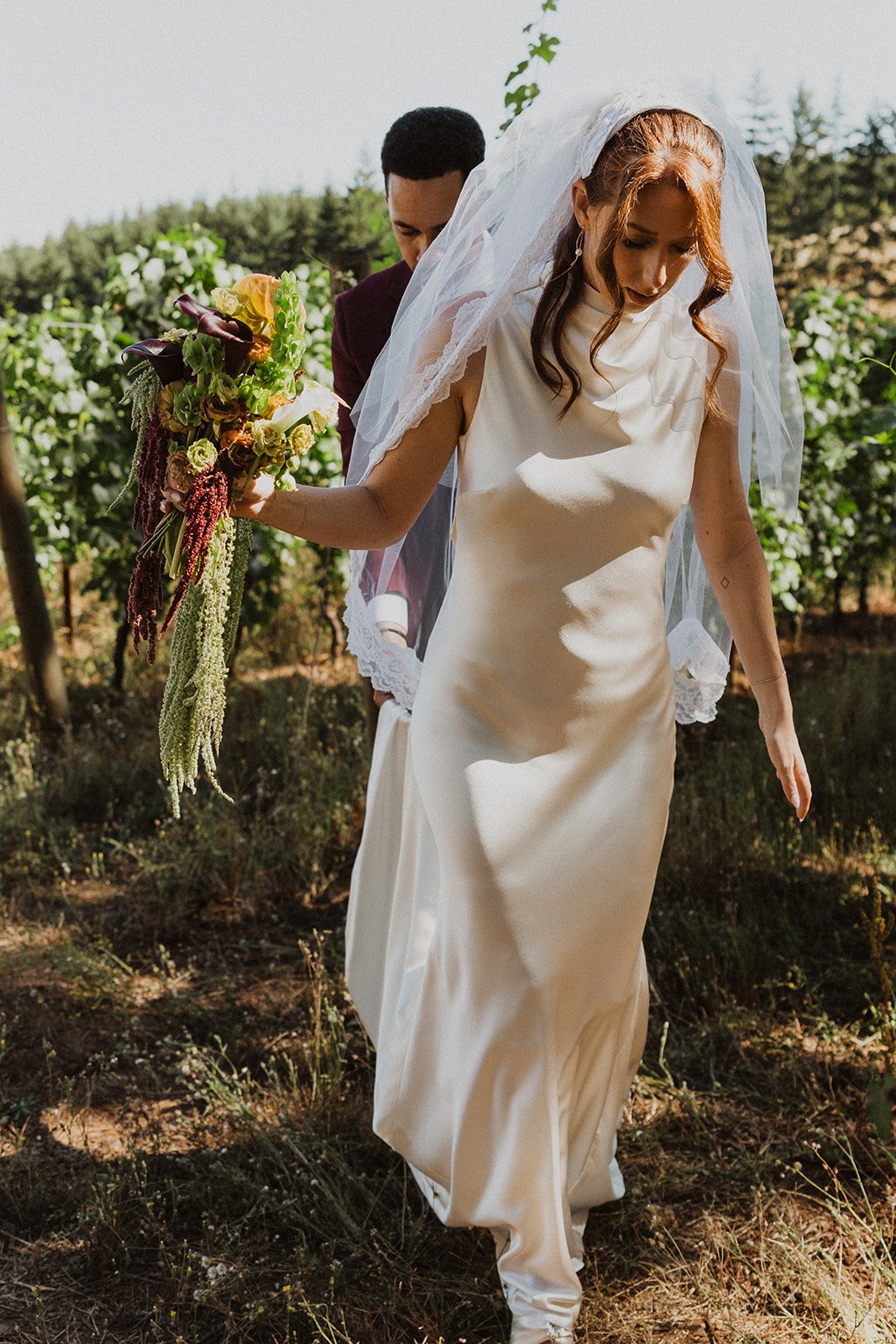
Charlotte and Lucas got married outside, blue sky the whole afternoon. That's how I'd expect most August weddings there to go. Nobody books a place like this to stand indoors in summer. You book it knowing that if the sky turns, nobody has to scramble.
The walls do two things nobody puts on a venue listing. They're two feet thick at the base, and that much earth holds temperature, which usually means a room like that stays more comfortable in August than a tent or a glass box with no mass to it. Your grandparents will notice that before they notice the view. The second thing is color. Rammed earth is a warm sandy neutral with visible striations in it, so people standing against it look like themselves. No green coming off a painted wall, no orange bouncing off wood paneling. It sounds like a small thing until you've been to a wedding where half the reception photos have a color in them that nobody chose.
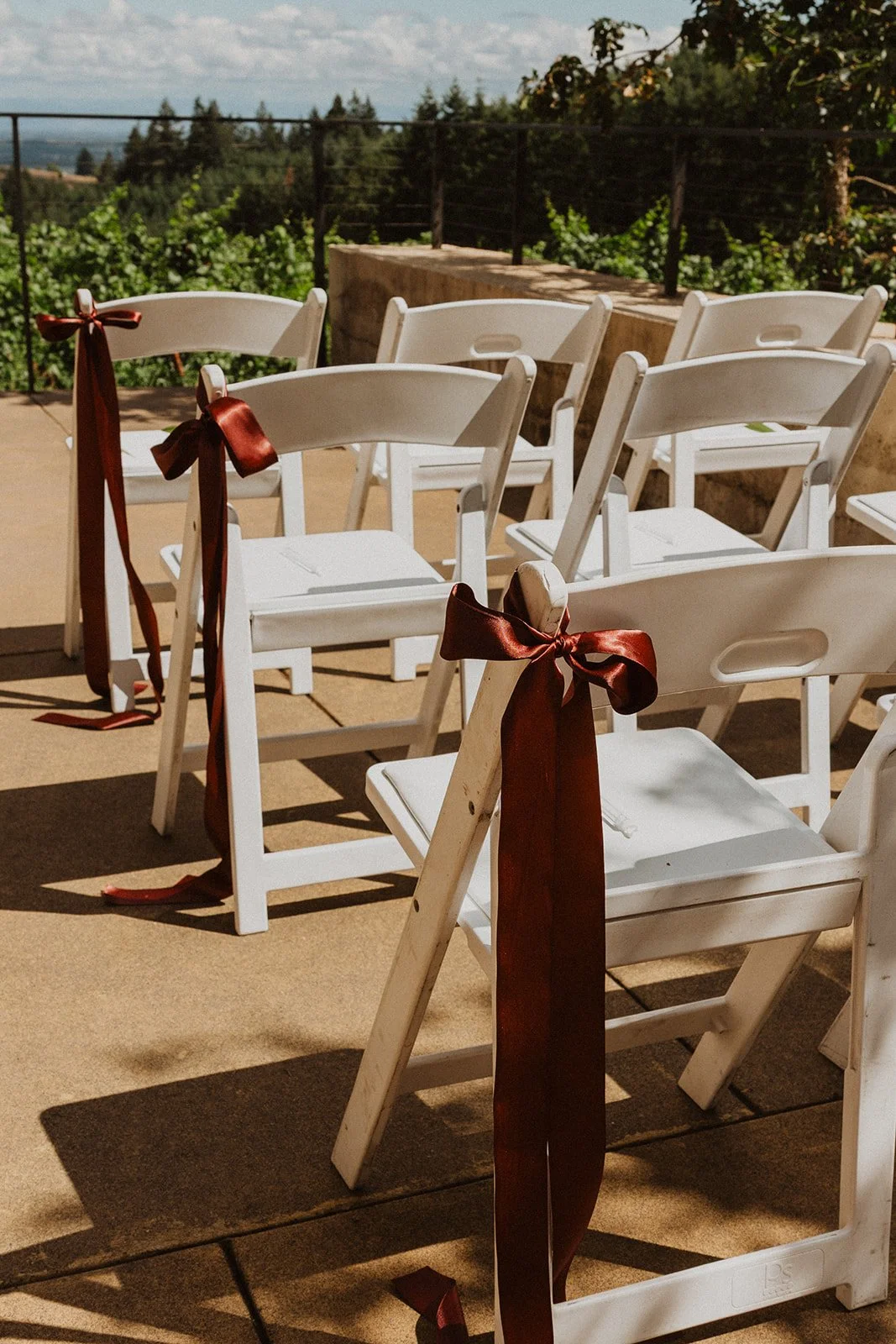
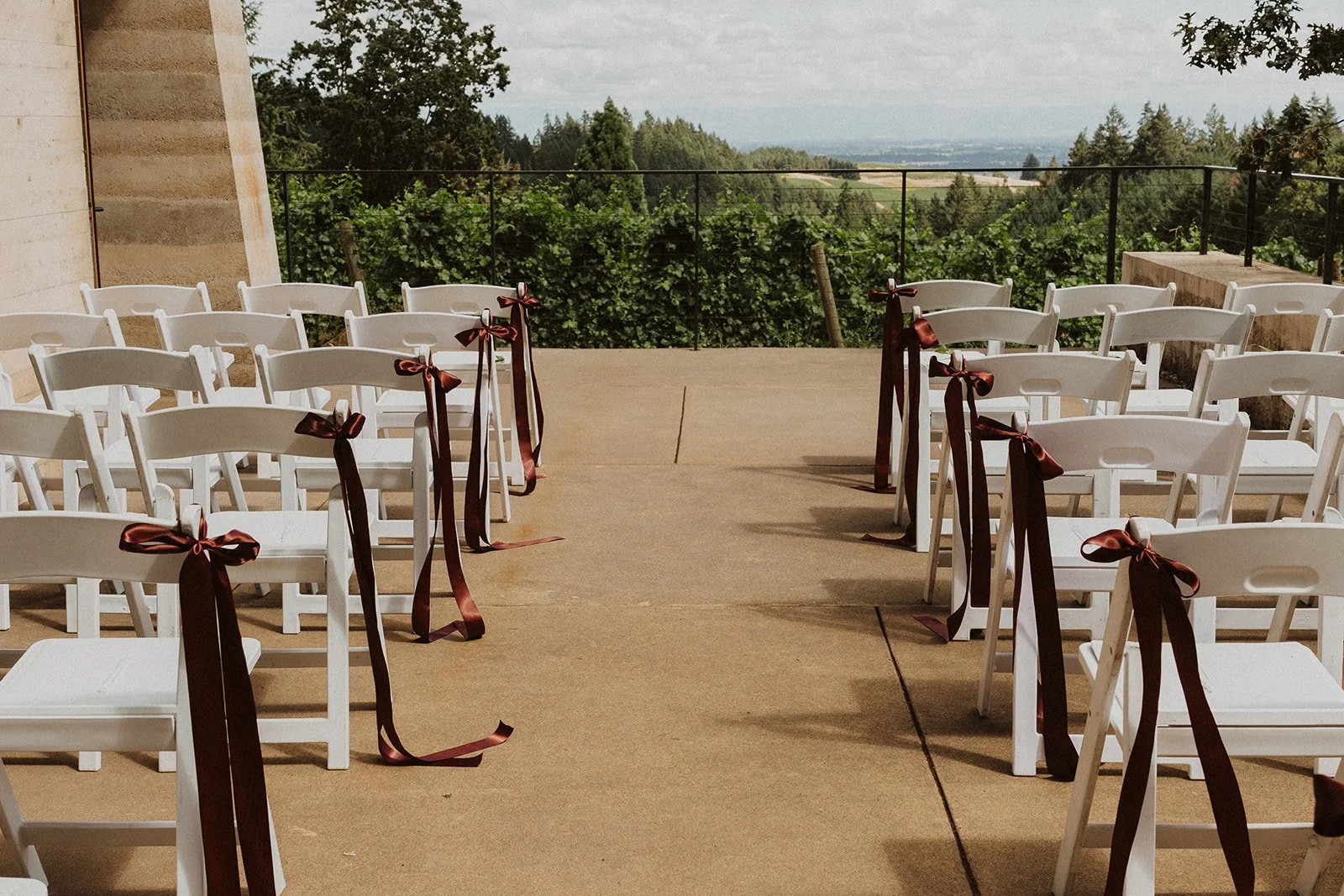
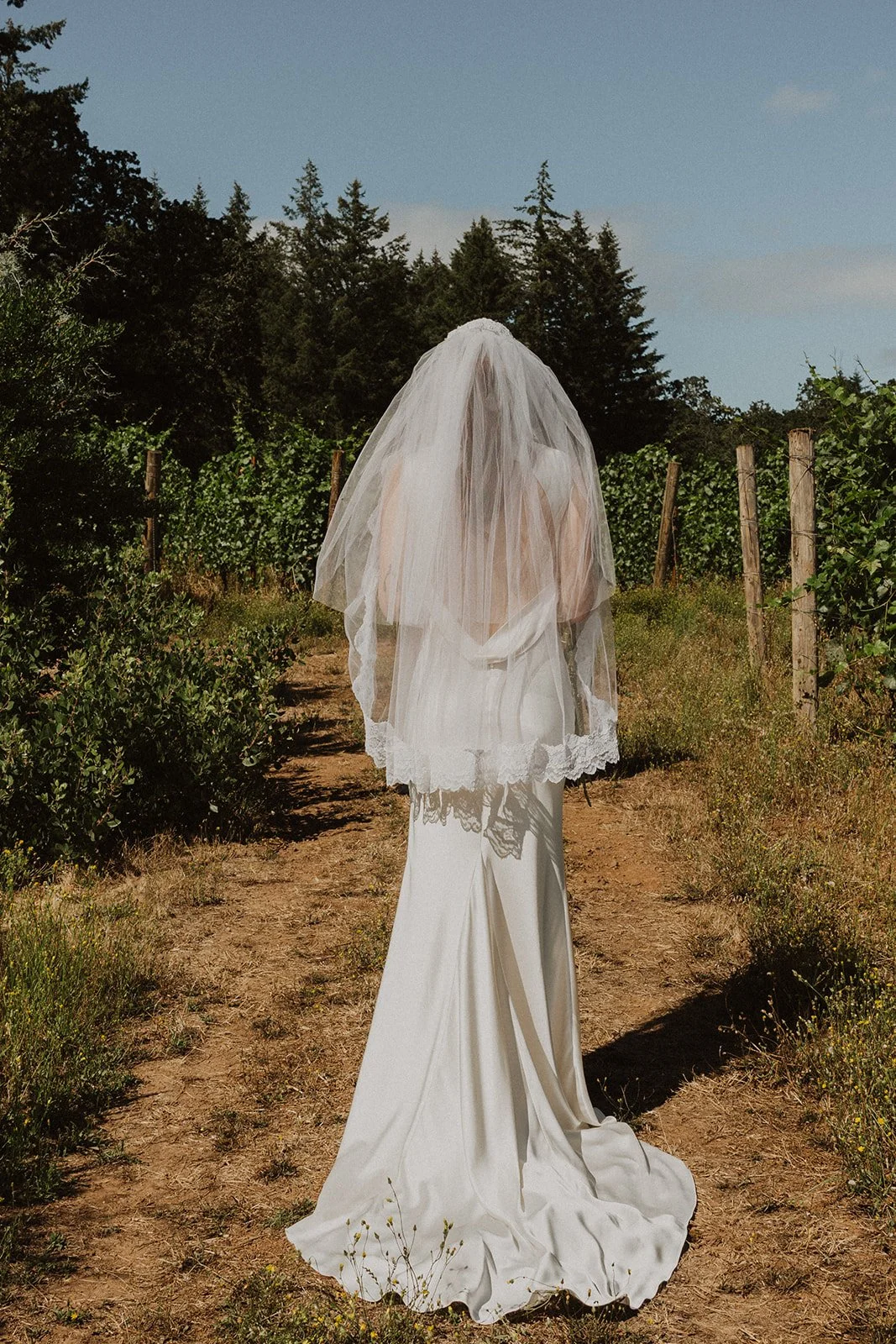
Outside you've got the vines, the valley past them, mountains past that, and old oaks on the property. The useful part is which way it faces. The view runs out and down, so a ceremony set toward it has your guests looking at the valley instead of at a parking area or a catering van, and depending on the hour it keeps the sun off everyone's faces rather than in their eyes. Those two things change how a ceremony feels more than anything you could rent to put in it. If you want to see what a whole wedding looks like in light like that, not just the two photos that make Instagram, my wedding portfolio is the quickest way to tell whether we're a fit.
Who I'd Recommend Rodeo Hills To
After photographing a wedding there, my read is that Rodeo Hills isn't trying to be everything to everyone, and that's most of why I like it.
I'd put it high on your list if your guest list is on the smaller side and food and wine are part of why you picked a winery rather than a backdrop for photos. The place serves a full meal alongside a tasting as a normal part of its week. That tells you where its attention goes, and it shows up in how a dinner runs there.
I'd also put it high on your list if weather is the thing you keep circling back to. I made that case above so I won't repeat it, but the short version is that going inside here isn't a downgrade, which is not true at most venues.
It works, too, if you want the wedding to feel like a trip without asking your guests to take one. Under an hour from Portland means people can come out for the weekend or drive out that morning and be home that night, and neither group feels like they picked wrong.
Where I'd steer you somewhere else: if you want one contract that covers tables, chairs, catering, coordination and a backup room, this isn't that. You'll be assembling a team. Plenty of couples like that part of it. If you know you won't, a full-service venue will make you happier and there's nothing wrong with knowing that about yourself.
What an Oregon Vineyard Wedding Gives You That a Ballroom Doesn't
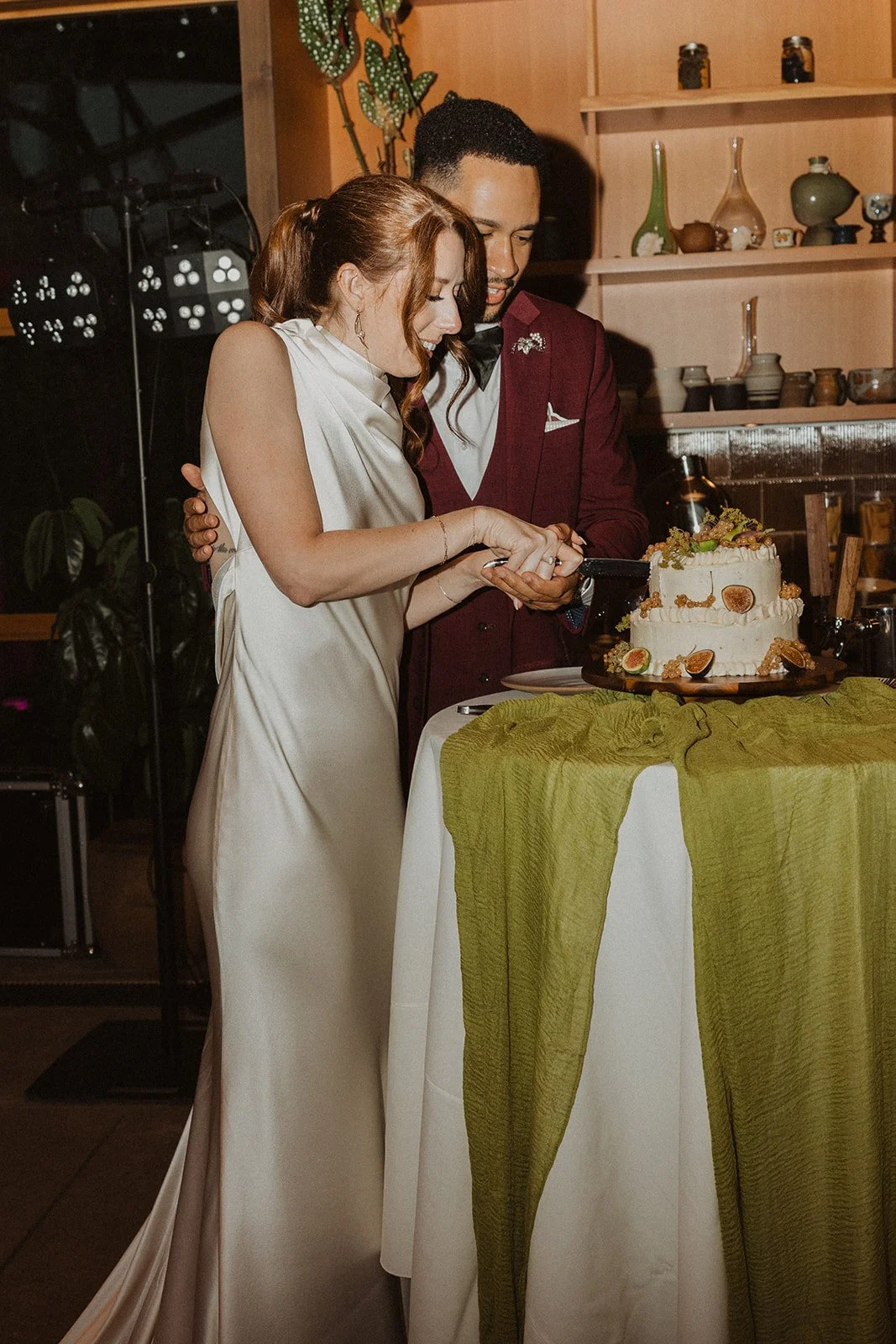
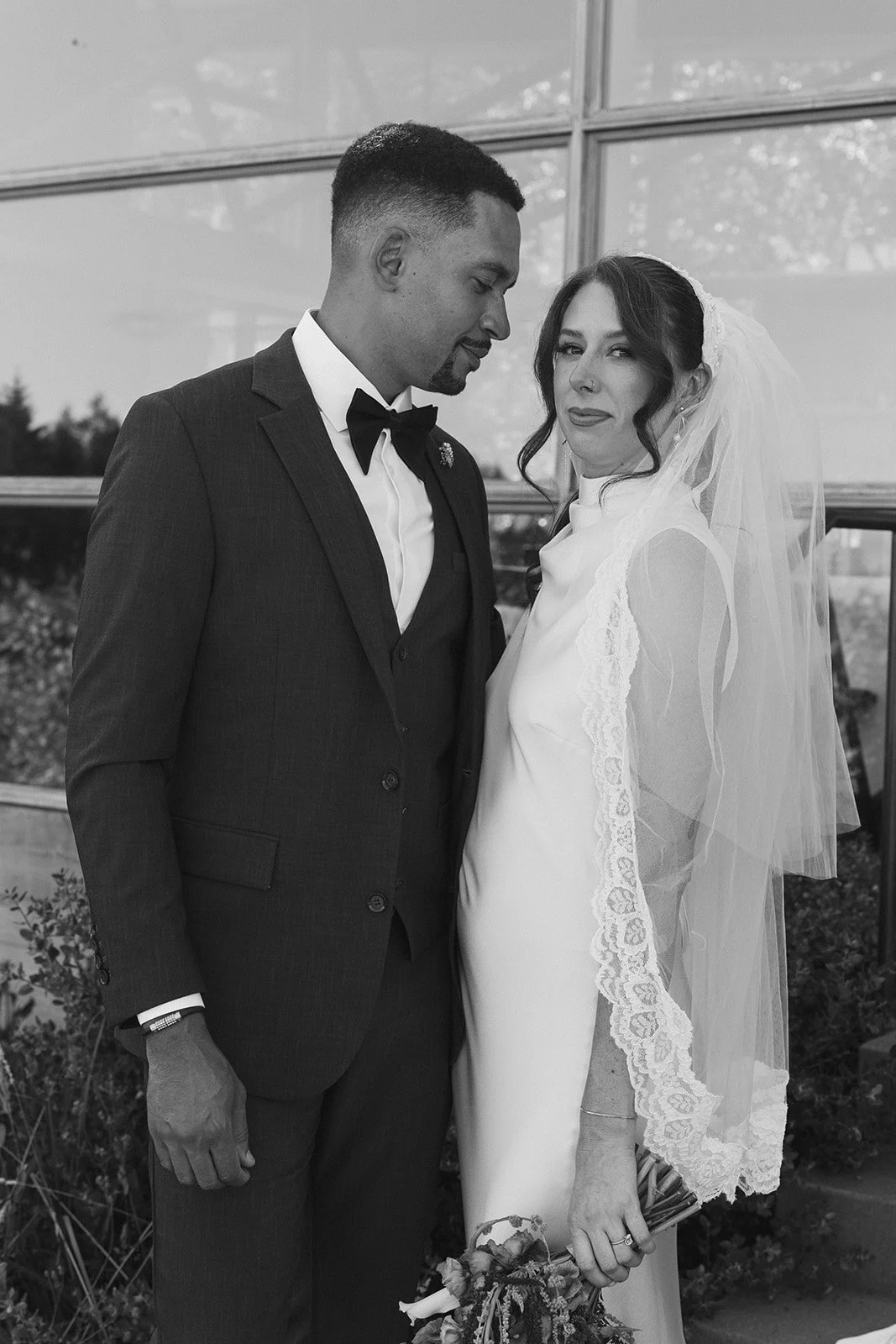
Charlotte and Lucas had about forty people, and wine country rewards that scale. An Oregon vineyard wedding gives you something a hotel ballroom structurally cannot, which is a reason for your guests to make a weekend of it.
Dundee is in the Willamette Valley, under an hour from Portland depending on traffic, and it's surrounded by other wineries within a few minutes of each other. That means the people who traveled for you are not sitting in a hotel until four o'clock. They're tasting somewhere down the road, having a long lunch, running into each other. By the time your ceremony starts, they've already had a day together, and you can feel it in the room.
I've found that's the single biggest difference between a wine country weekend and a wedding where everyone flies in, attends, and flies out. A Willamette Valley wedding turns your guest list into a group before you ever walk down an aisle, and the photos from the reception are different because of it. People who spent Saturday afternoon together behave differently at dinner than people who just met in a receiving line. The coast does a version of this too, in a completely different register. If the weekend is the part pulling at you more than the wine, planning a Cannon Beach wedding around that exact idea is the closest thing I've written to a companion piece.
Choosing Your Date: What the Vineyard Will Actually Be Doing
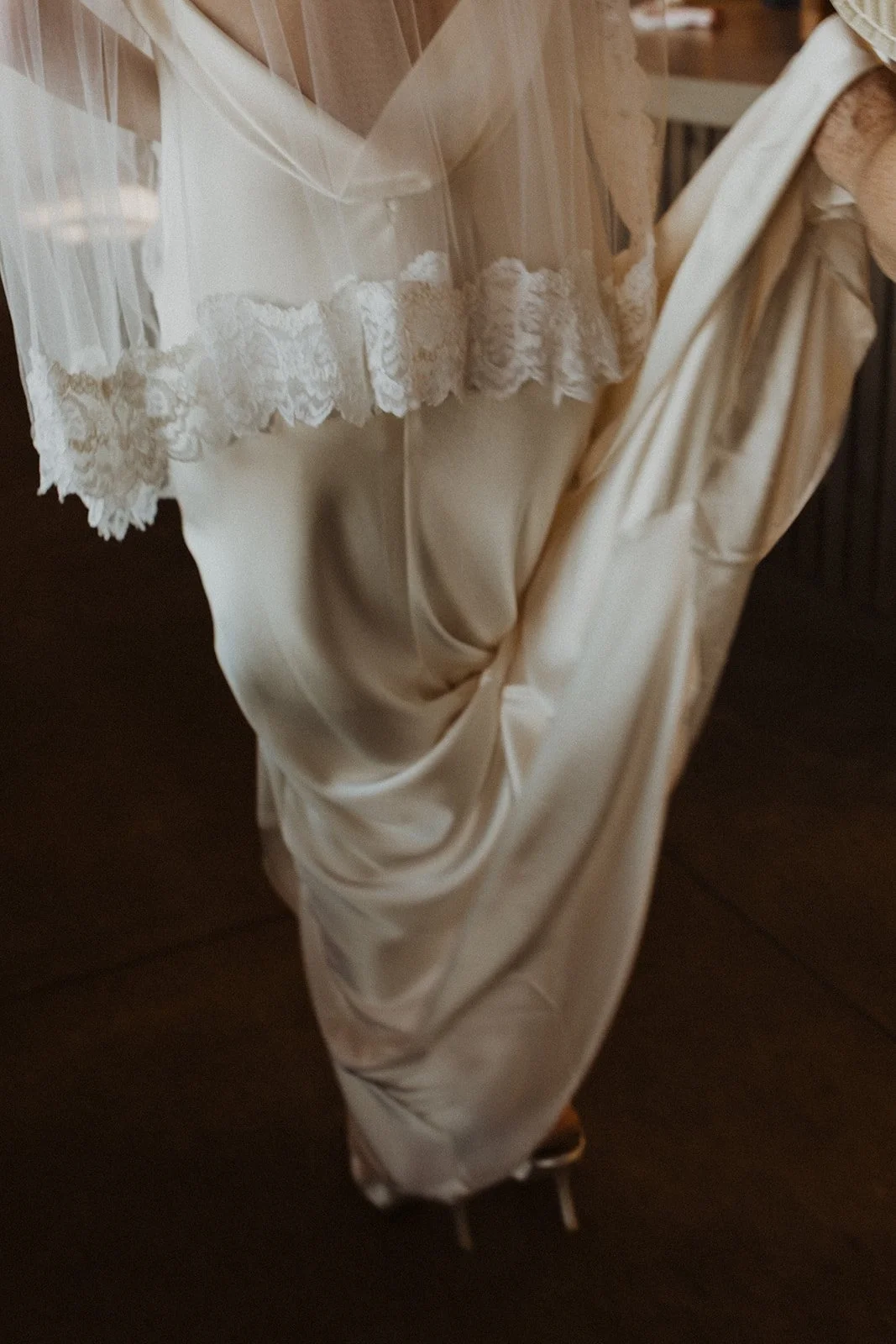
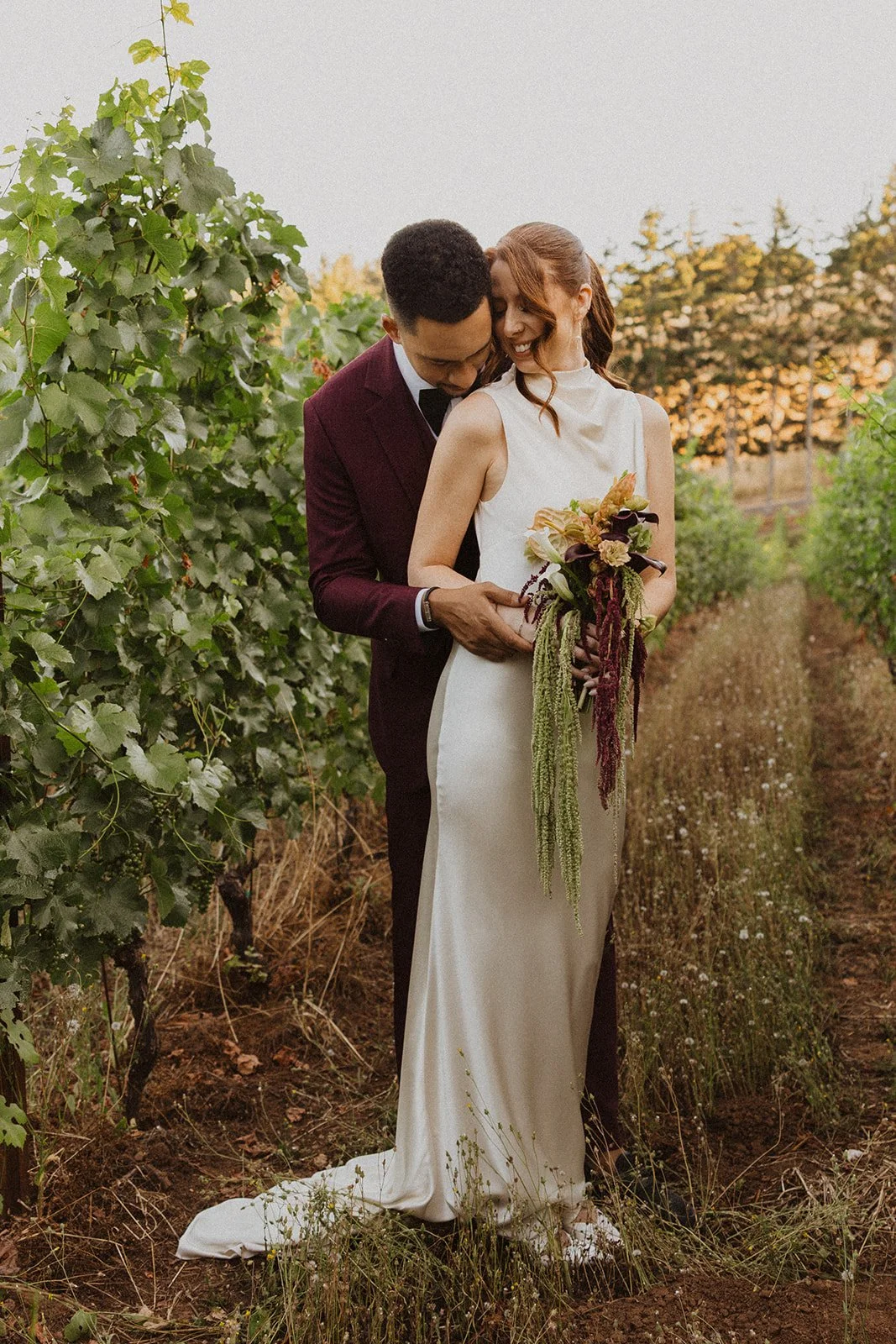
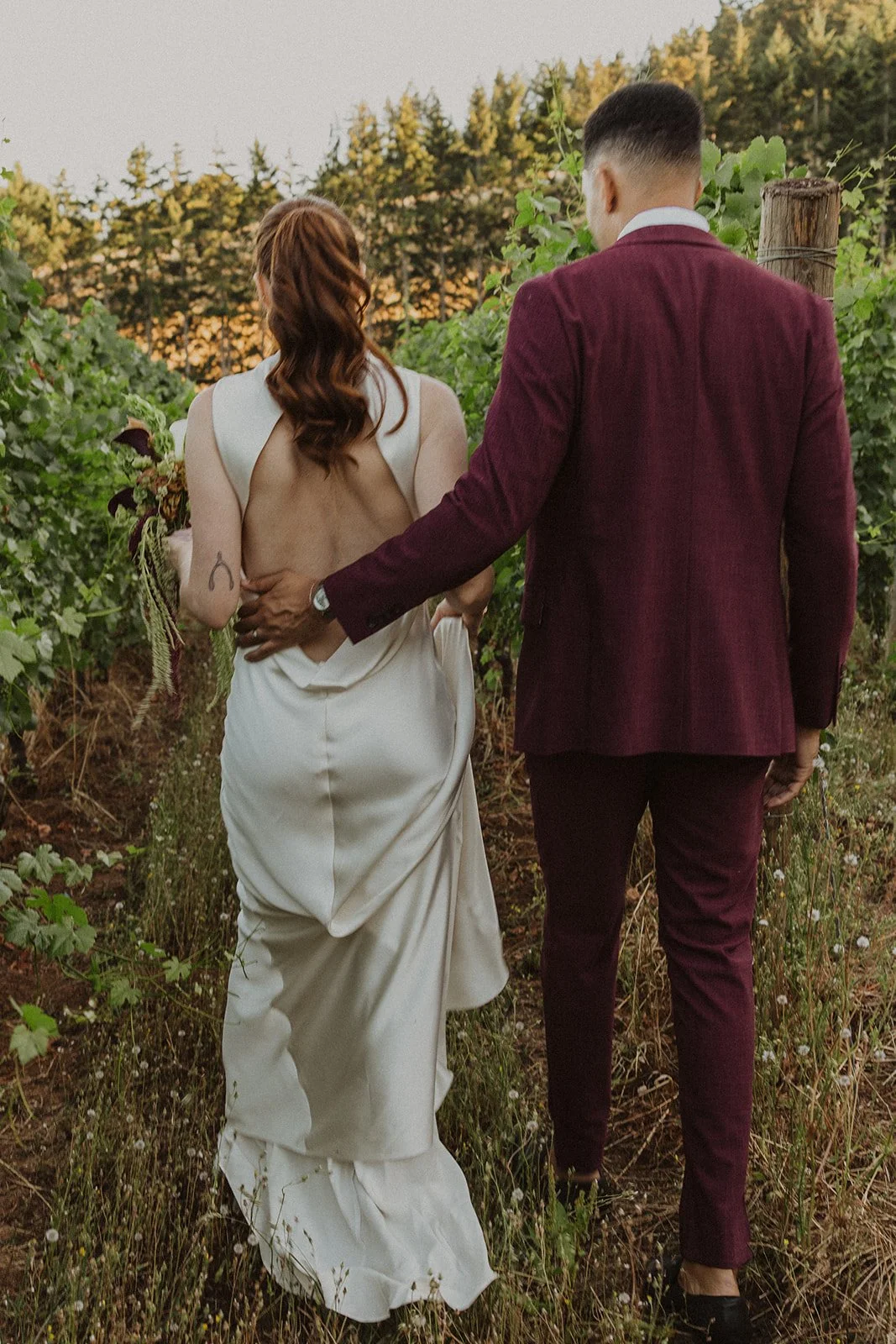
The vines are the part couples forget to ask about. A vineyard in May and the same vineyard in September are not the same place. Early season is bare wire, posts, and brown ground between the rows, which has a stark quiet look to it and resembles nothing on the venue's Instagram. By June the canopy is in, and everything is green. Late September into October, you get color in the leaves, and you also get harvest, which at a working winery means bins and trucks and people with a job to do that has nothing to do with your wedding.
None of that is a problem on its own. It becomes one if you booked in February off photos taken the previous October and spend the morning of your wedding realizing you pictured something else. Ask what the vines will be doing the week you're there. If you still have flexibility on your date, that answer should count for more than most of the things people use to pick a month.
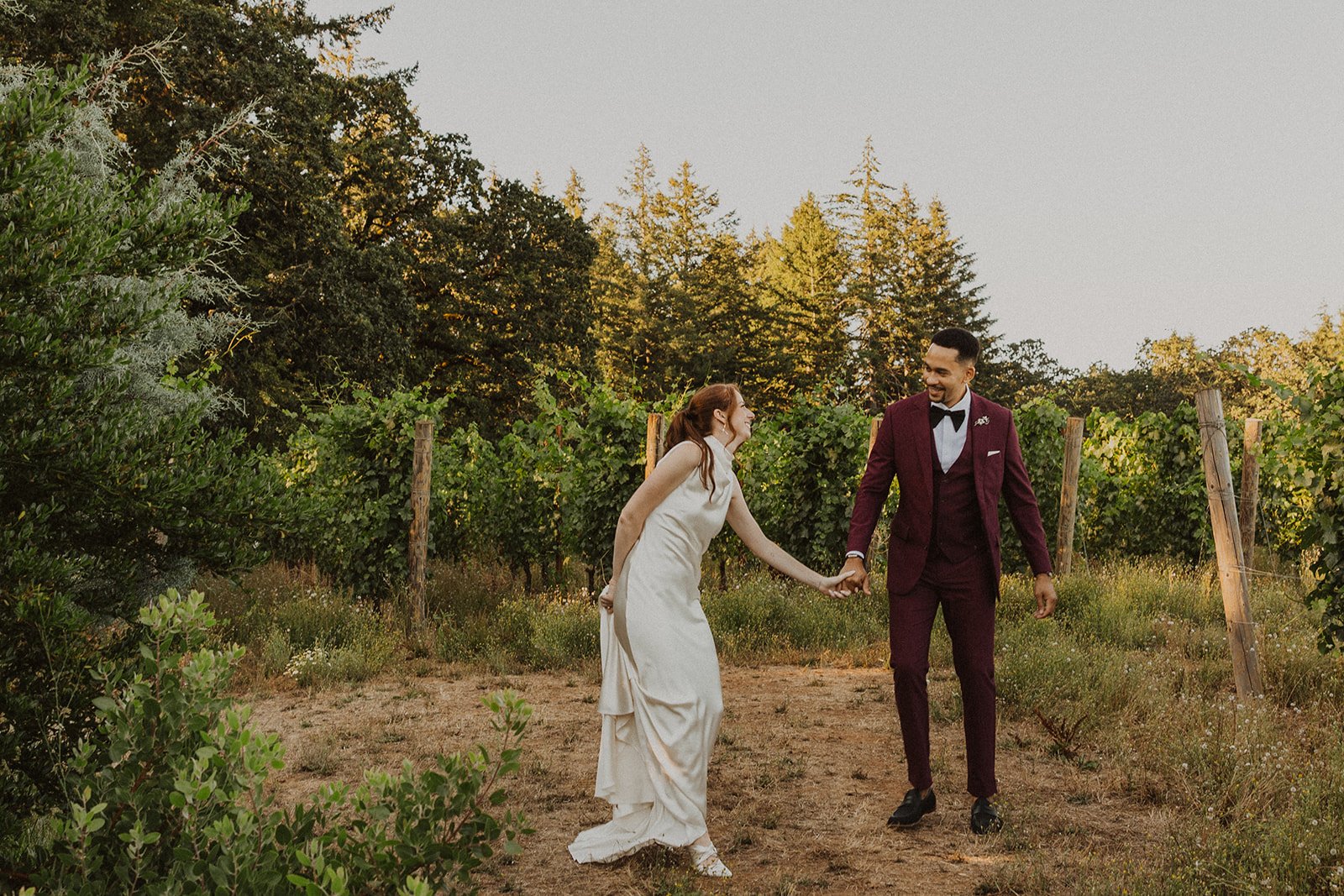
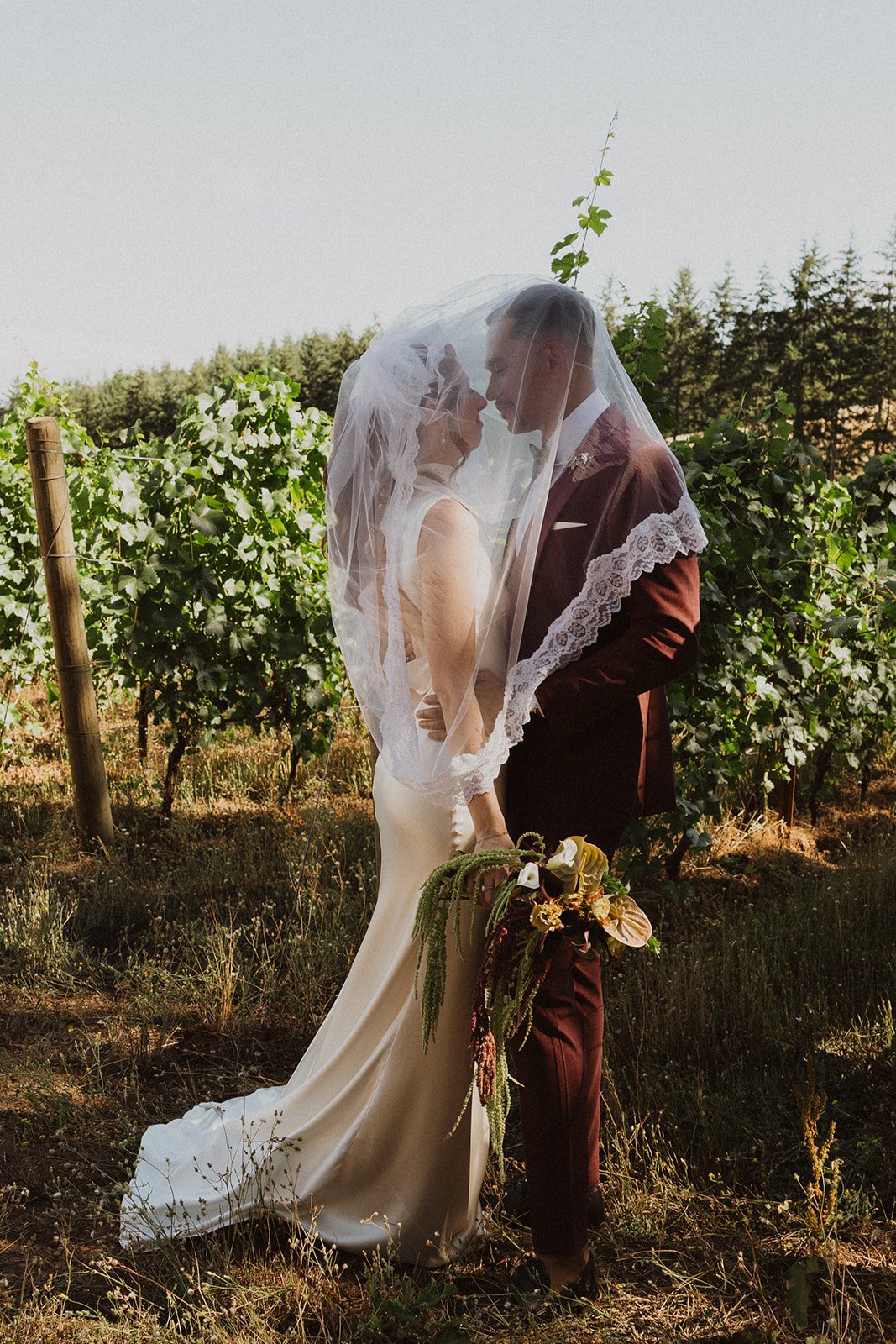
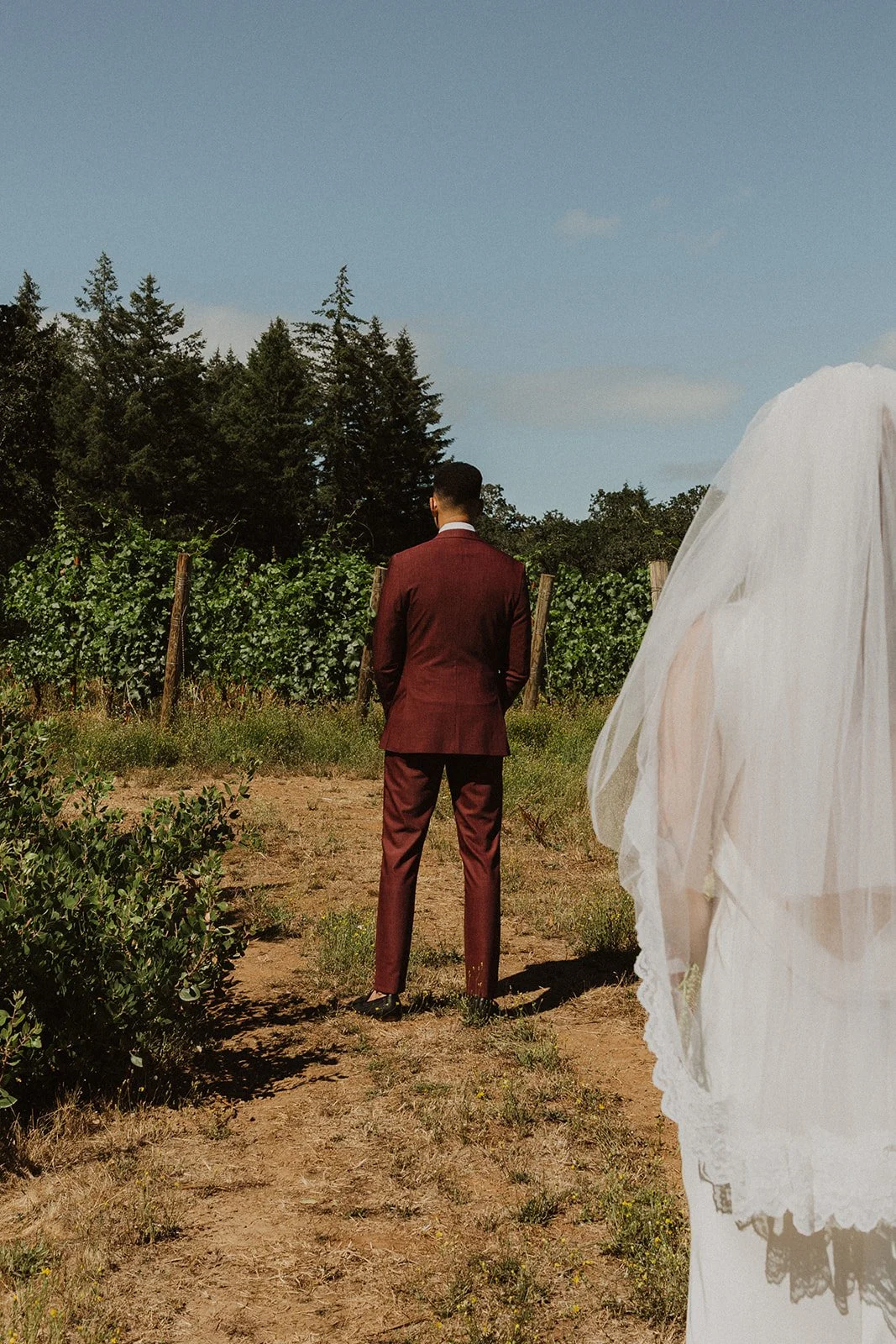
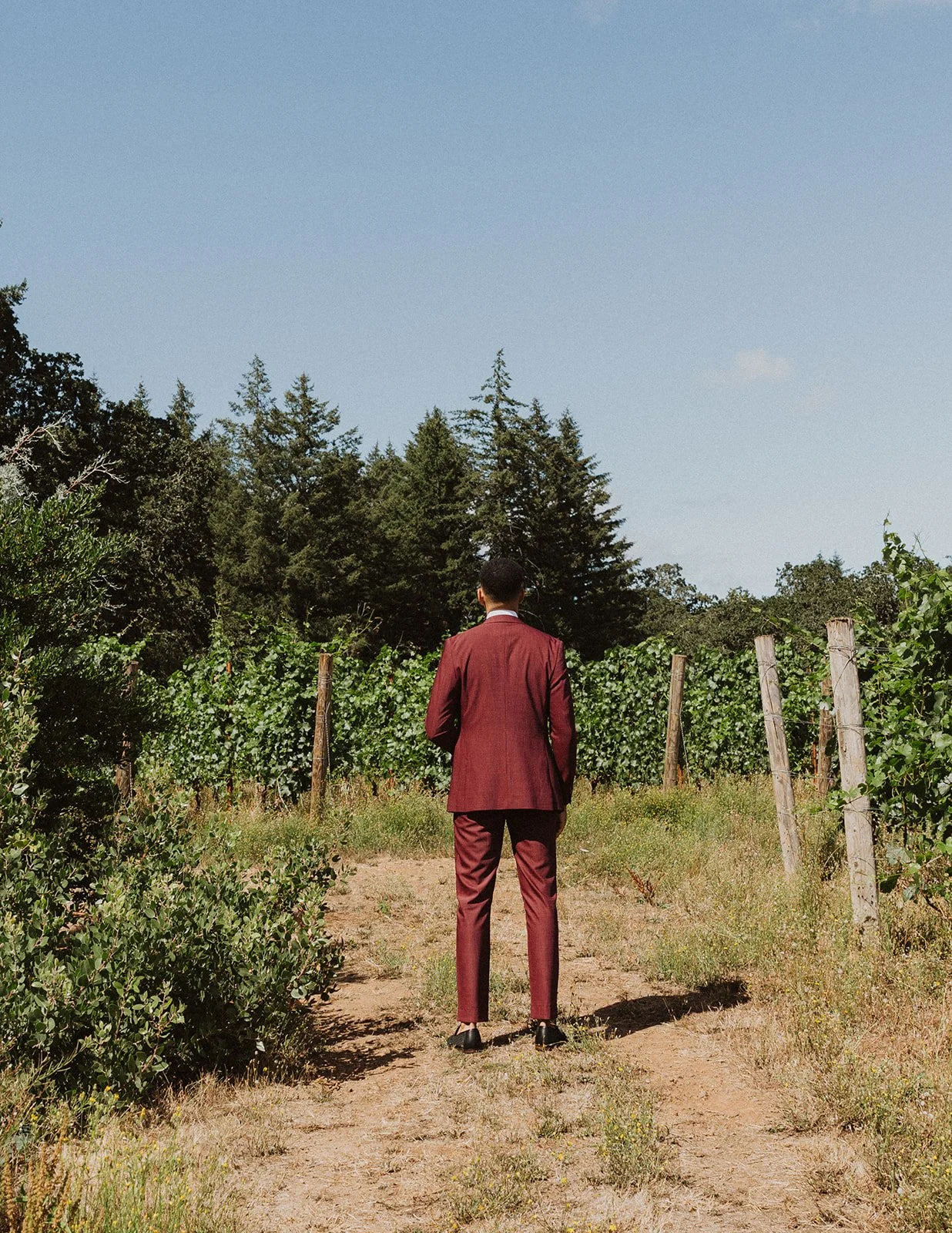
Charlotte and Lucas got married the first of August, which is full canopy, everything green, nothing turning yet. If you want the color you've seen in wine country photos, that's six to eight weeks later, and it arrives with harvest attached.
The other half of the date decision is light, and it moves faster than people expect. Early August gives you light well past eight, so an evening ceremony has room to breathe. Get to late October and the day closes down hours earlier, which puts that same ceremony's dinner in the dark. Neither is wrong. They're different timelines, and if you're picking a month partly for how the vineyard looks, check what time the light goes on that date before you build a ceremony time around it.
What a summer date costs you instead is heat. Charlotte and Lucas had clear blue sky start to finish, which sounds like the dream and also means guests sitting in direct sun for however long the ceremony runs. If you're getting married outside in August, ask about shade, put water where people are sitting, and think hard before scheduling the ceremony at the hottest part of the afternoon. That's the trade nobody mentions when people pick a summer date for the green.
Okay, But What If It Rains?
Rain doesn't ruin a wedding. Indecision about rain ruins a wedding. The couples who handle it well made three choices months ahead: what the indoor layout actually is, who makes the call, and what time that call gets made. The ones who have a rough morning are making that call at nine that day, with a coordinator waiting on an answer and a florist waiting on the coordinator.
Two things I'd nail down specifically. First, the indoor layout has to be the real one, with your guest count, seated, with tables, and somewhere for the caterer to work. A room that holds a hundred people standing is not a room that holds a hundred people at dinner, and that gap is where rain plans fall apart. Ask the venue to walk you through it with your number rather than a general one. Second, the walk. If guests are parking on gravel and moving between spaces outdoors, rain changes that for anyone in heels or anyone using a cane, whether or not the ceremony moved inside. Ask where people wait and how they get from one part of the day to the next without standing in it.
What you actually lose on a wet day is smaller than you think. You lose the specific outdoor ceremony you pictured. You don't lose the day, and at a venue with a real indoor option you don't lose the photographs either. I'd rather you spend that worry on the layout question, which is solvable, than on the forecast, which isn't.
Do You Need to Leave Rodeo Hills for Photos?
No, and I'd push back if you wanted to. This comes up because a lot of couples have seen a timeline with a travel block in it, or had a photographer suggest a spot twenty minutes down the road. Sometimes that's the right call. If a venue gives you one background and you've used it up in ten minutes, driving somewhere is a reasonable trade.
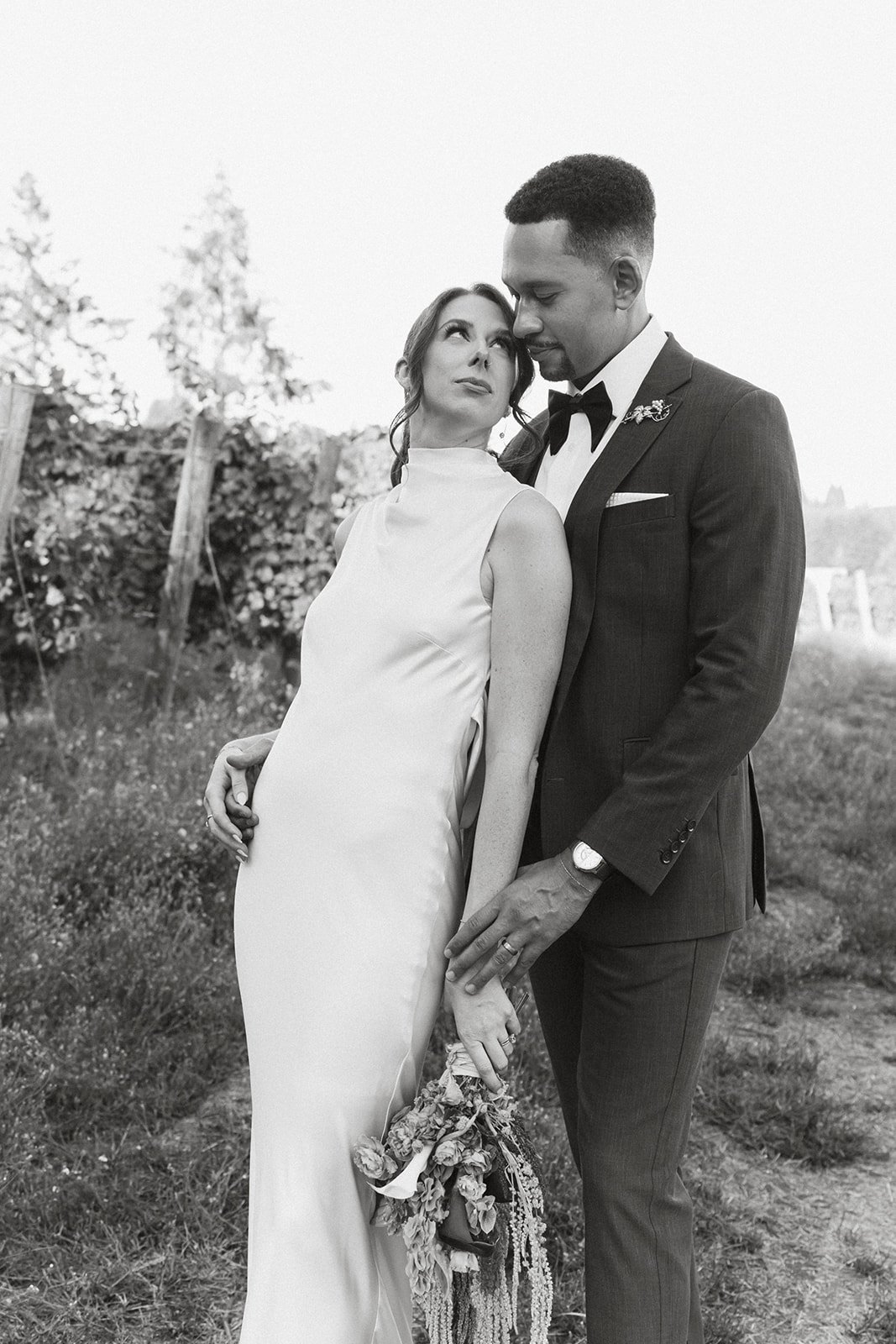
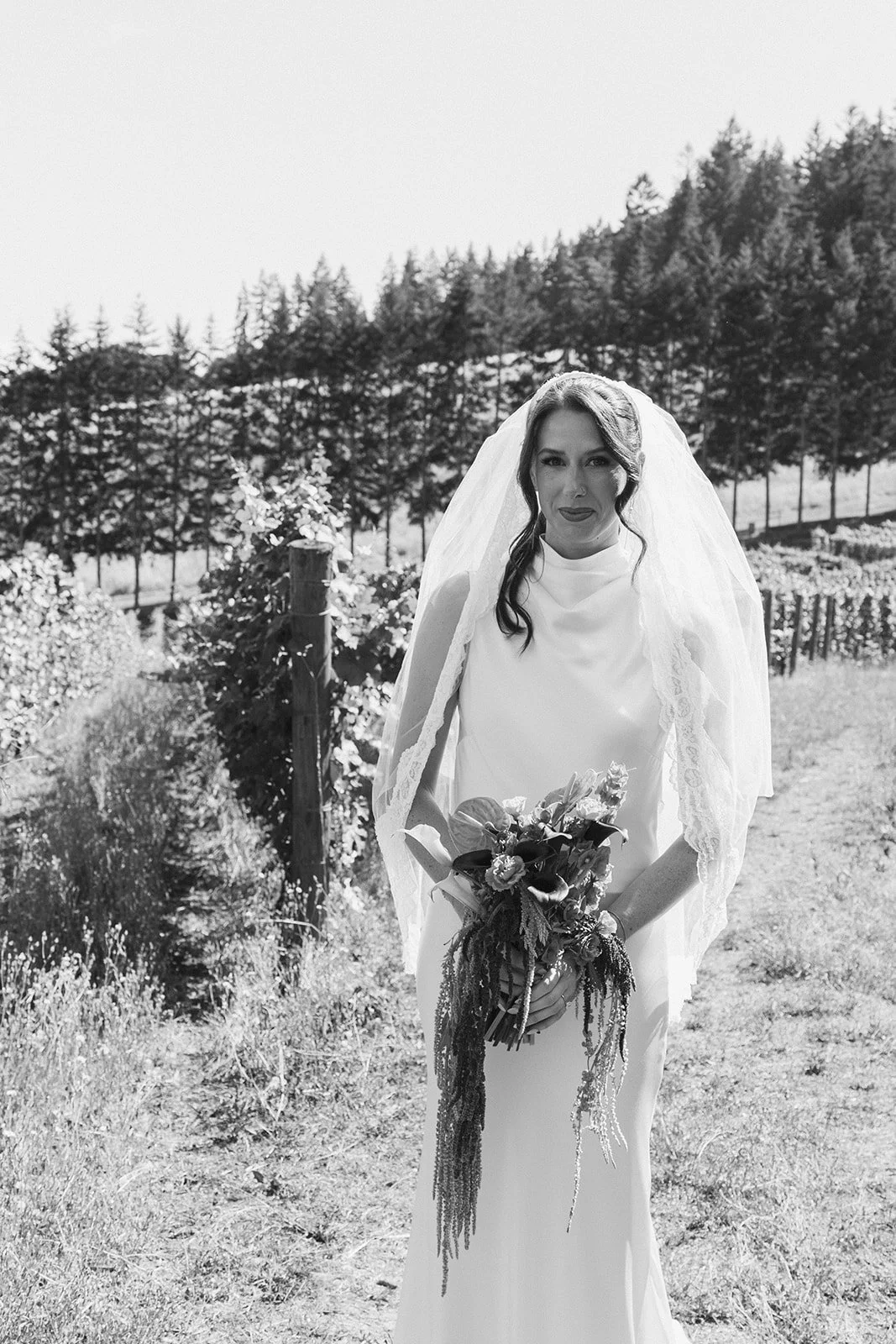
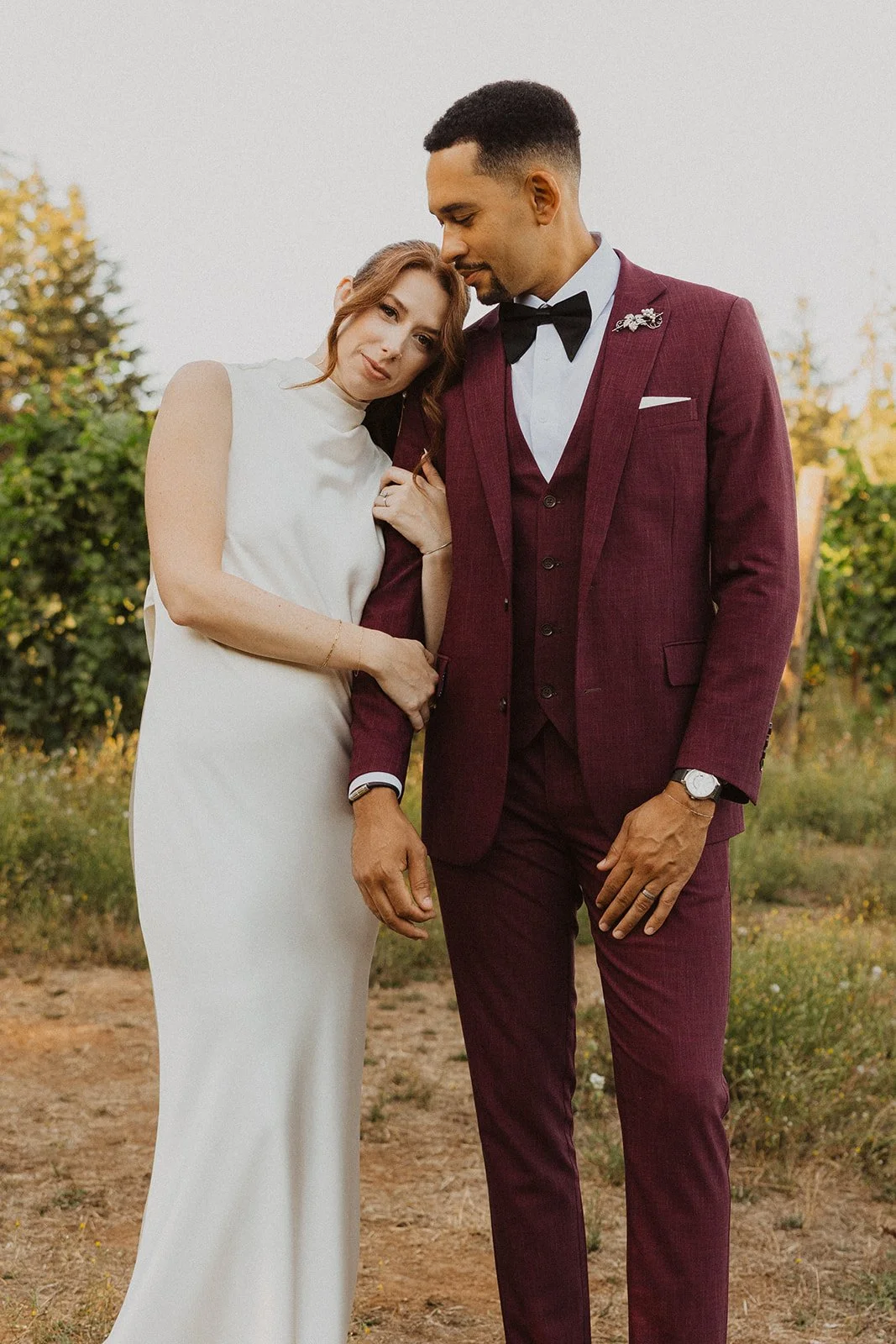
That isn't the situation here. Without leaving the property you have the rows themselves, open ground with the valley and the mountains behind it, the oaks, the slope, and a room with glass on three sides that looks nothing like any of the outdoor options. The entry hallway is dark and close and different again. That's five or six completely different backgrounds without moving a car, and the light on all of them shifts enough between late afternoon and evening that the same spot gives you two different photographs a few hours apart.
Here's what leaving actually costs, and it isn't the driving. Twenty minutes each way plus the time you're there is most of an hour, and that hour comes out of your own wedding. It's usually cocktail hour, which is when your guests are at their loosest and the people who traveled are finally in the same room. You invited everyone you love out to a winery in Dundee. I'm not putting you in a car so we can go find a different field.
What I'd do instead is two short windows, ten or fifteen minutes each, at different points in the evening. You get more variety that way than one long block gives you, and you're gone from your own party for twenty minutes total instead of ninety. That's what I'd recommend at most venues. Here it's easy, because all of it is already outside the door.
Planning an Oregon Winery Wedding: What I'd Ask Before You Book
Small Oregon wineries often don't publish wedding information, because weddings aren't their main business. Rodeo Hills doesn't list capacity, packages, or rental terms anywhere public, and plenty of wineries in the valley are the same. That isn't a red flag; it just puts the burden on you to ask well. These are the questions I'd ask, roughly in the order I'd ask them, based on where I've watched winery weddings get complicated.
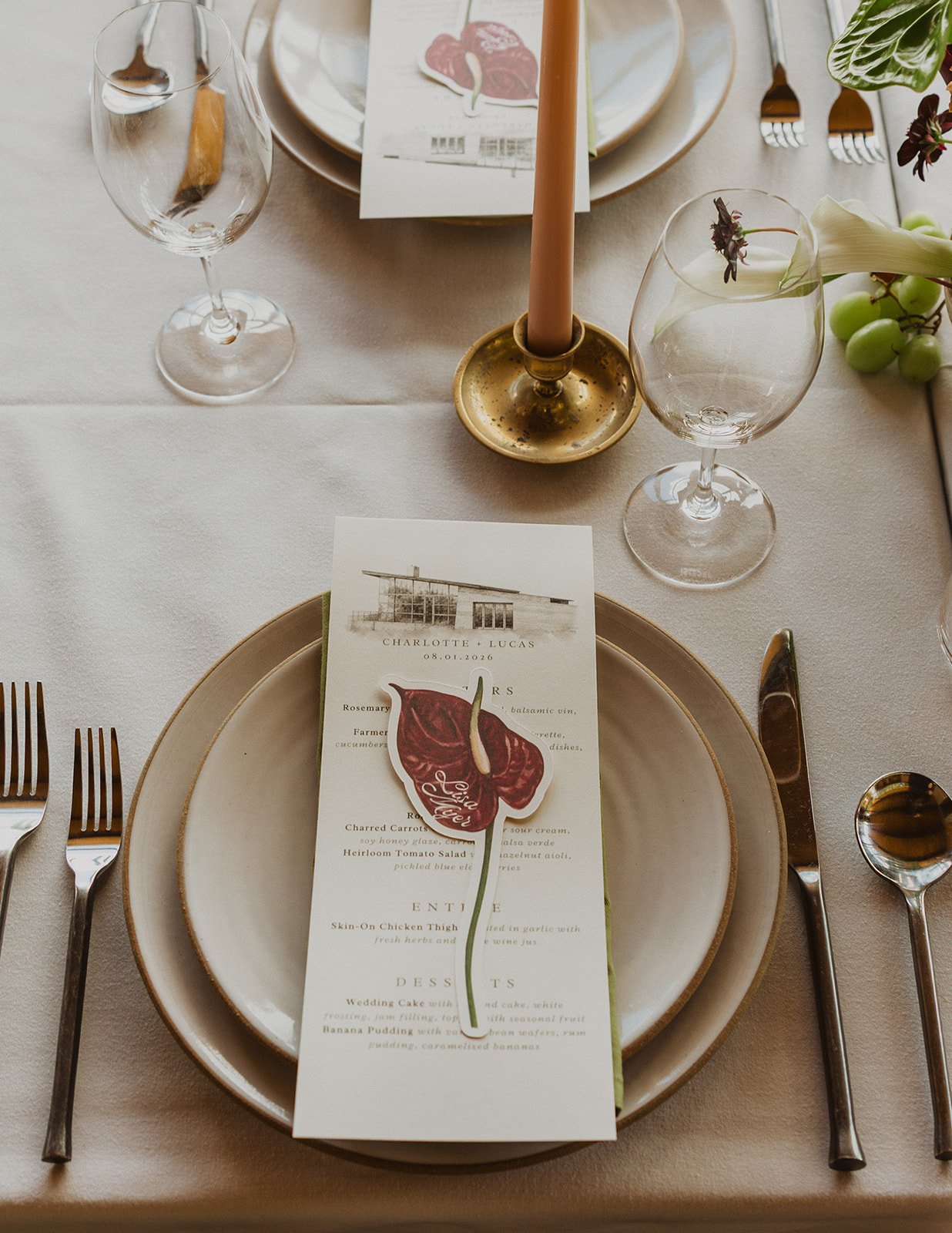
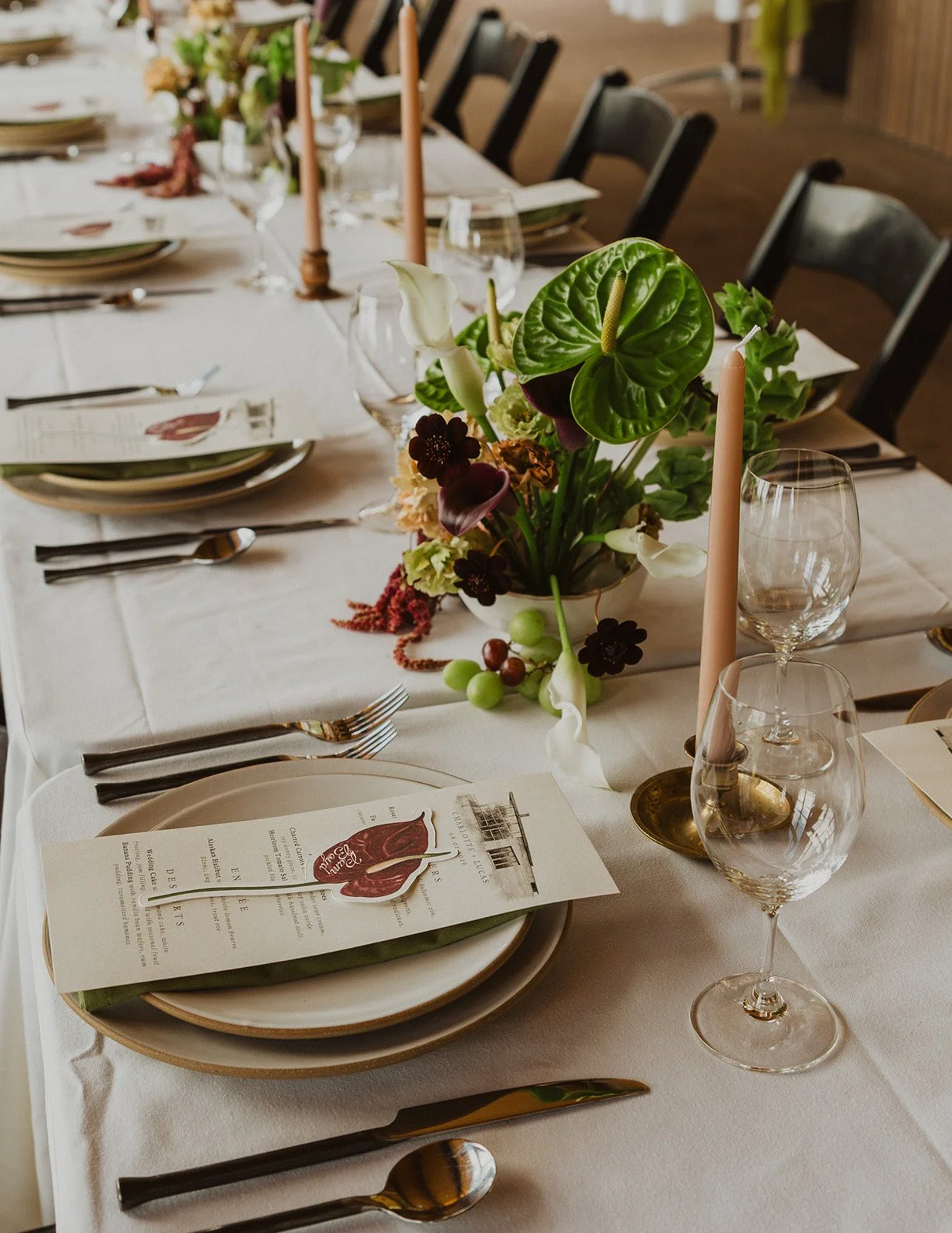
Start with what's the actual rain plan, and has anyone run it? Not whether there's an indoor option, but whether that room holds your full guest count seated, with tables, plus somewhere for the caterer to work. Those are three different room sizes, and venues don't always volunteer the difference. Which leads straight into is there a kitchen, and who's allowed to use it, because wineries frequently have a preferred caterer list or a licensing situation around food. Charlotte and Lucas worked with Morchella, and a caterer who has already worked a space removes an entire category of day-of problems. Ask who's been there before and start from that list.
Then the two that quietly set your timeline. Where do people get ready, and is it somewhere you'd want to spend three hours? Couples forget this one, and it shapes the morning more than any other decision they make. A tasting room is not a bridal suite. Sometimes there's a good option on site, sometimes the answer is a rental down the road, and either is fine as long as you know before you've built a schedule around it. What time does amplified music have to stop? Wineries sit in agricultural areas with neighbors, and wine country noise rules are stricter than most couples expect. Ask for the number, not the vibe.
Last, the one nobody asks until it's already a problem: how do guests park, and how far do they walk? Gravel and hills are what catch people out. If you have grandparents coming, ask specifically about the distance from parking to the ceremony and whether anyone can be dropped closer. I've watched this go badly at otherwise well-planned weddings, and it's completely solvable by one email in advance.
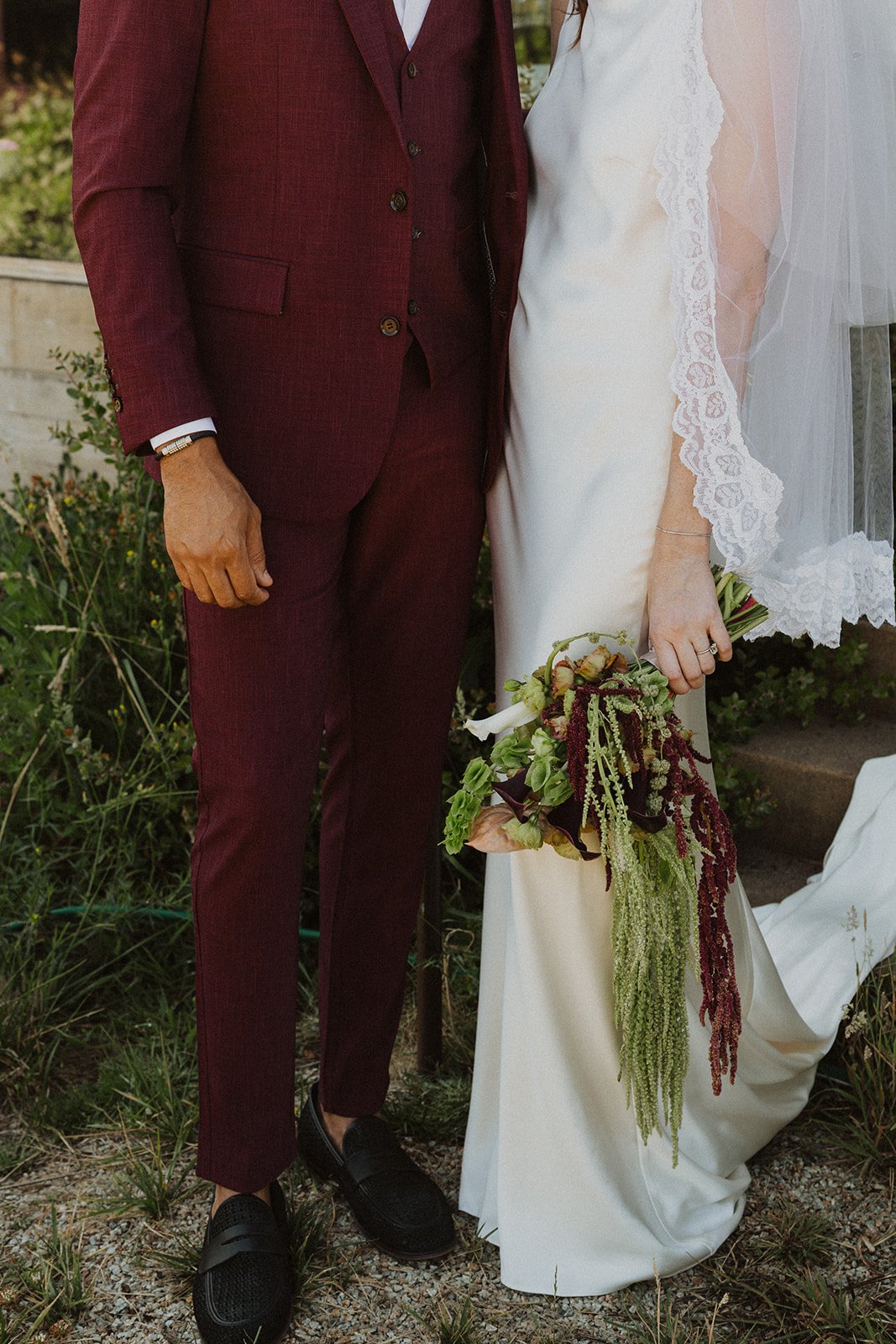
One more thing I'd say generally: at a venue without a full in-house events team, a coordinator stops being optional. Charlotte and Lucas had Infinity NW Events, and at a property that isn't running weddings every weekend, that role is what keeps the day from landing on a family member. I'd rather you cut something else. If you're starting to picture a wine-country wedding and wondering what photography looks like when you don't want the day built around photos, here's how I work.
If You're Touring an Oregon Winery, Take These Questions With You
Here's the whole thing in one place so you can screenshot it. Most of it applies at any small winery. It exists because Rodeo Hills, like a lot of working producers, doesn't publish any of this, and the only way to find out is to ask someone.
The room and what's included
How many guests can comfortably sit for dinner, with tables?
What does the rain plan look like at that exact number?
What's included in the rental, and what am I bringing in?
When can vendors start setting up?
Your vendors
Which caterers and coordinators have worked here before?
Where does catering prep, and what do they need from me?
Any restrictions on decor, open flame, or alcohol service?
Your guests
Where does everyone park, and how far is the walk?
Can cars stay overnight?
Do you recommend a shuttle, and have couples used one here?
What's the route like for someone using a walker or a cane?
Where can we get ready, and how many people fit in that space?
The calendar
What will the vineyard be doing the week of our date?
What parts of the property are off limits during harvest?
What time does amplified music have to stop?
Keep that list handy when you go tour places. When you get to the point of figuring out how photography fits into the day, here's what working together actually involves.
Questions Couples Ask About Winery Weddings in Oregon
When's the best time of year for an Oregon winery wedding?
September, if it were up to me. Late June through early October is the reliable weather window and September sits at the good end of it. Charlotte and Lucas got married the first of August and it worked, so this isn't me telling you to avoid summer. September just gives you the same green with less heat. The trade-off there is harvest, which at a working winery means the business is genuinely busy that month, so ask how your date sits against theirs.
How far in advance do wine country venues book?
For a Saturday in peak season, twelve to eighteen months is normal in the Willamette Valley, and the smaller the venue, the fewer dates exist to begin with. If you have a specific winery in mind, ask early. Weekday and off-season dates open up considerably.
Is a winery wedding more expensive?
Not automatically, but the costs sit in different places. You may pay less for the space and more for rentals, catering logistics, and coordination, especially at a smaller property that doesn't have tables, chairs, and a kitchen built in. Ask what's included before comparing a winery quote to a full-service venue quote, because they're rarely measuring the same thing.
Is a Winery Wedding Right for You?
It probably is if:
Wine is genuinely part of why you're drawn to this, not just the setting.
You want your guests to have somewhere to be all weekend, not only for six hours.
You'd rather eat well and linger than move through a run of scheduled events.
You're fine with a venue that's also a working business with its own calendar.
It probably isn't if:
You're planning for a few hundred guests and a dance floor that holds most of them.
Getting your people out of the city would be a real hardship for a lot of them.
Your date is fixed and it lands in the middle of harvest.
You want everything on one property, including where people sleep.
None of those are wrong answers. I'd rather you find yours now than four months into planning something that isn't quite fitting. The best venue isn't the one with the best view, it's the one you stop thinking about once you're standing in it.
Planning Your Own Oregon Winery Wedding
If you've made it this far, you're probably past browsing. So here's what happens if you reach out: tell me your date, or the rough window if you don't have one yet, and where you're looking. I'll tell you whether I'm free, what it costs, and if I'm not the right fit for what you're planning I'll say so and point you somewhere better.
I'd rather have that conversation now than have you spend three months wondering.
VENDOR CREDITS
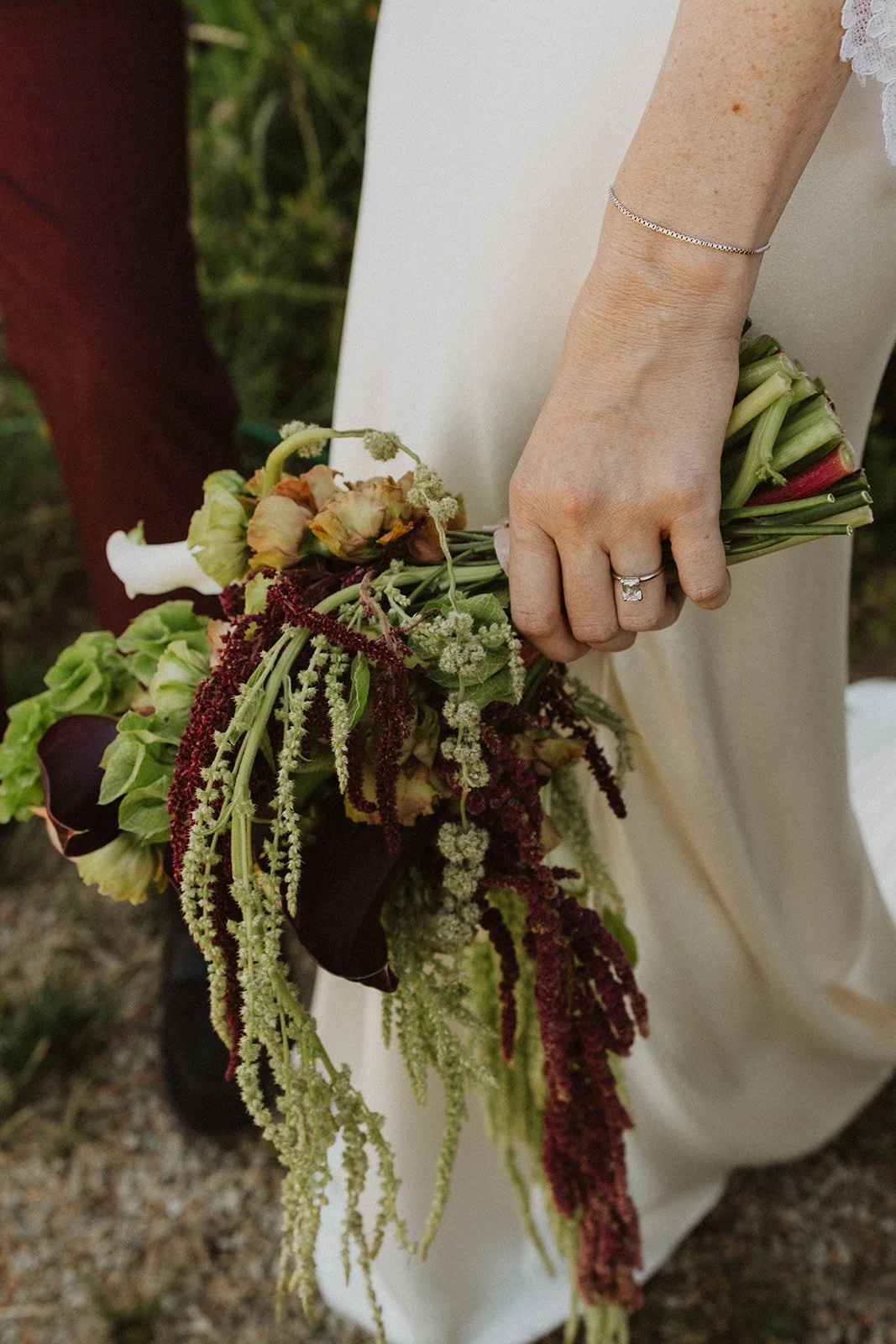
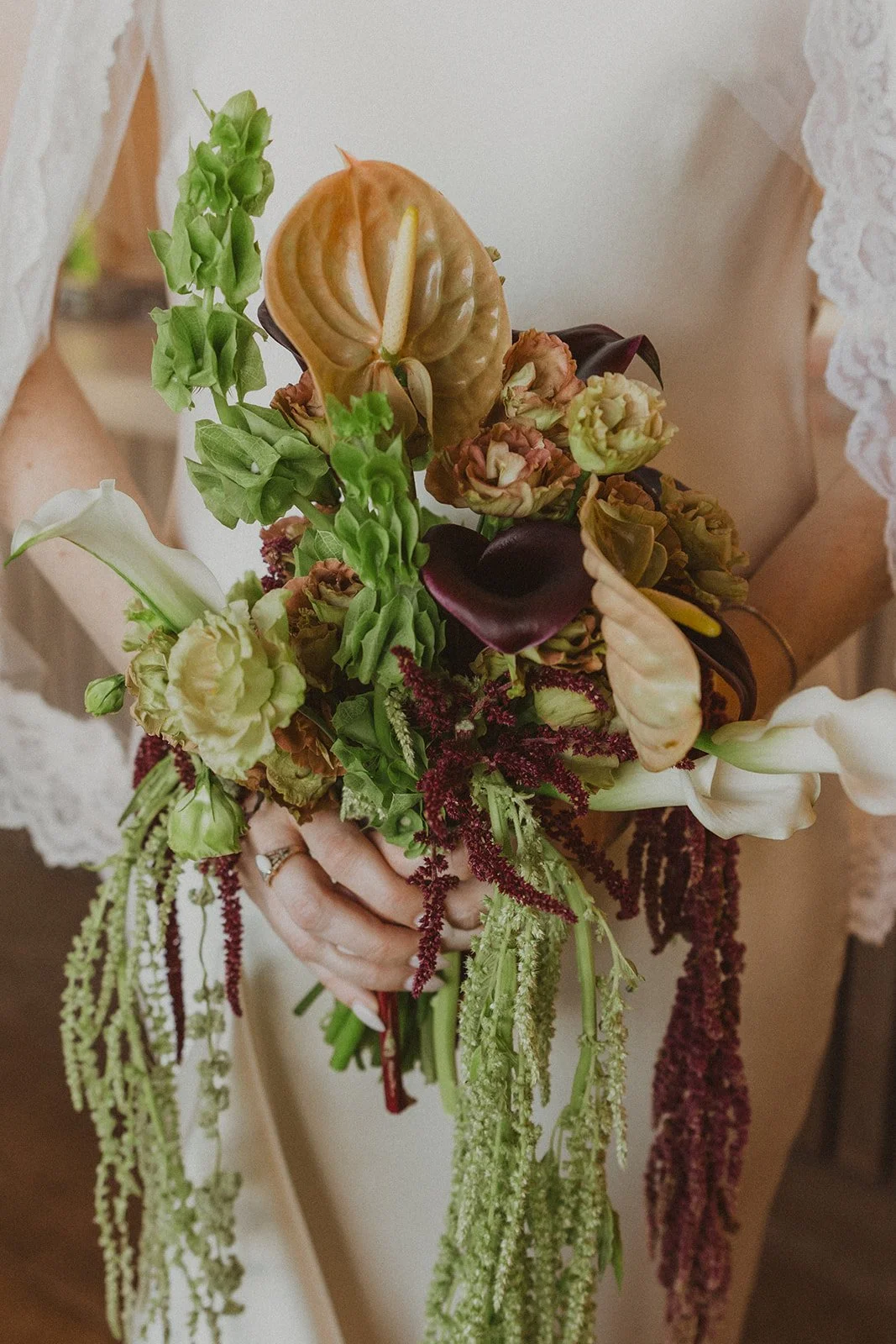
Venue: Rodeo Hills (@rodeohillswine) | Catering: Morchella (@morchellapdx) | Coordination: Infinity NW Events (@infinitynwevents) | Florals: Forage & Folk Co (@forageandfolkco)
STILL PLANNING? KEEP READING